1741 Gemeinhaus
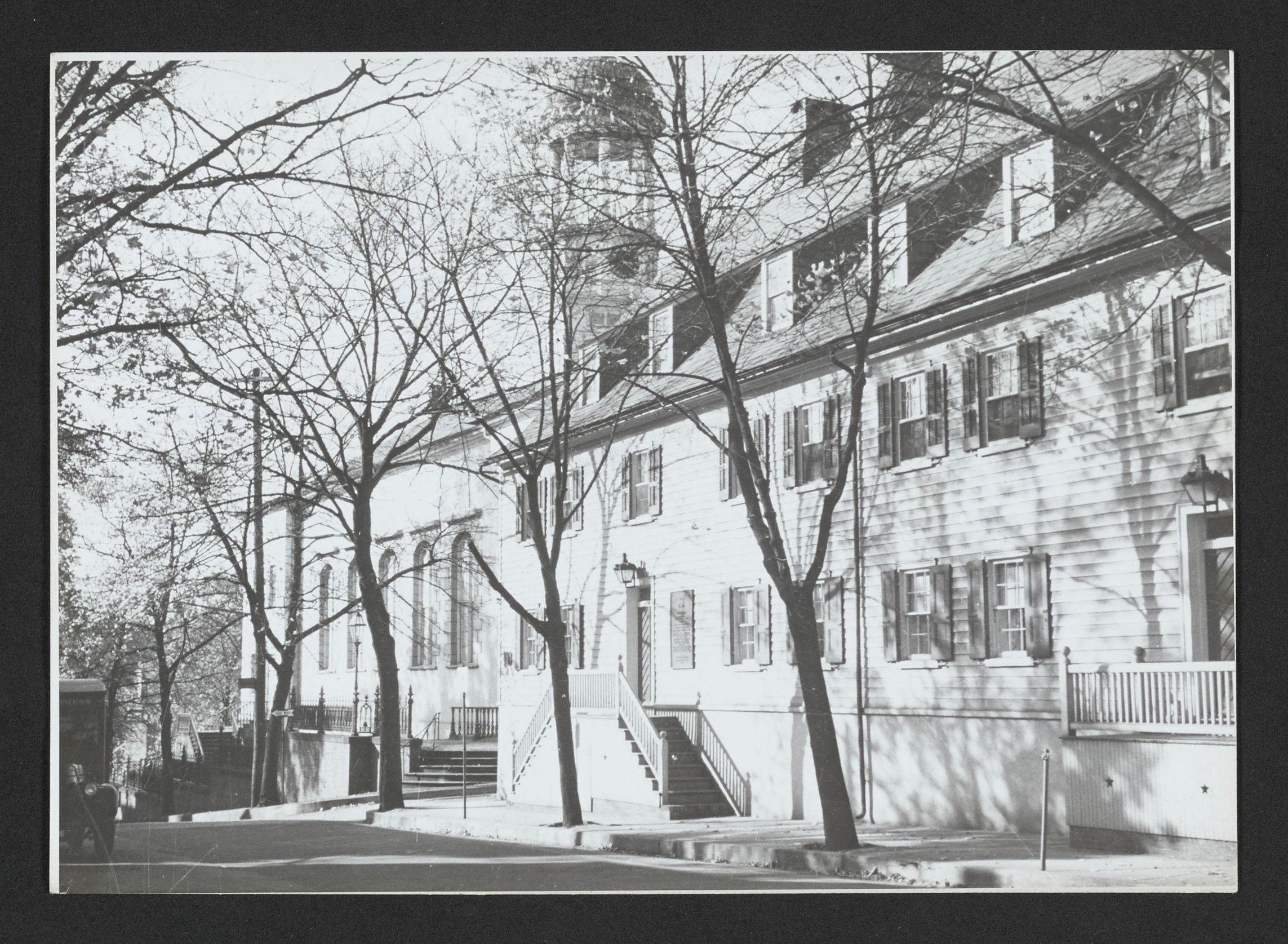
In 1741, a group of 15 Moravians purchased a tract of 500 acres located at the confluence of the Monocacy Creek and the Lehigh River. The First House built on the site was a one-story log structure erected in the Germanic Style, which sheltered both settlers and their livestock. The location of this building was where Hotel Bethlehem stands today. A second larger log building, the present day Gemeinhaus or community house, was partially completed by December of the same year, in time for a visit by Count Zinzendorf. It was during this visit that the Count officially christened the small community Bethlehem on the first Christmas Eve celebrated there.
A National Historic Landmark, the Gemeinhaus is a rare example of the primal Moravian prototype. It is the oldest building in Bethlehem, and the largest surviving eighteenth-century log structure (white oak) in continuous use in the U.S. Begun in autumn 1741 and completed in early 1743, it measures 28.3 m x 9.8 m The roof is slated and the distinctive clapboard cladding was added in 1868. The Saal (chapel) on the second floor is the oldest surviving Moravian worship space in the world. Over time, the building served various functions, as a home for the first settlers, for choirs of the single sisters and single brothers, as a church, an infirmary, school, and workshops. According to the cross-sectional view of the building from 1742-43 and pre-1772 floor plans, the basic floor plan of the building remains virtually unchanged from these early drawings. The structure was a residence for single and widowed women until 1966 when it became home to the Moravian Museum of Bethlehem.
Matterport scan by the Dresden University of Technology, with permission from the Moravian Knowledge Network.
Quick Facts
- The Gemeinhaus (Community House) was the second building built by the Moravians in Bethlehem. Construction began in September 1741 and was completed in December 1742.
- The Gemeinhaus is considered the most important building in every Moravian community.
- This building originally housed living space on the third floor, worship space on the second, workshops, offices and dining areas on the first, and space for food prep in the cellar.