1748 Second Single Brethren’s House
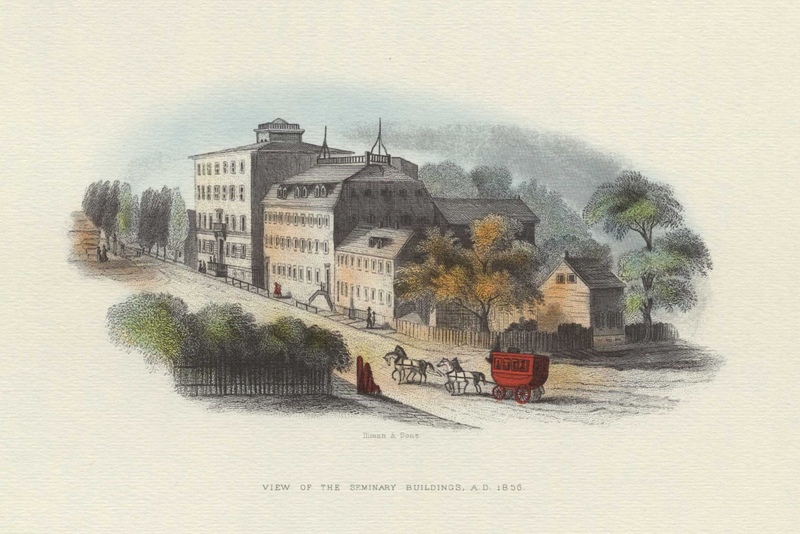
The largest of the stone buildings constructed by the early Moravian settlers of Bethlehem, the Second Single Brethren's House, or simply known today as the Brethren’s House, was erected in 1748 as housing for members of the Single Brethren’s Choir. Modeled after the building that housed the Moravian Church’s Headquarters in Herrnhut, Germany, the Single Brethren’s House was the first permanent Moravian residency on Sister’s Lane, which is now known as Church Street.
In order to fulfill its original purpose as housing for the members of the choir, the Single Brethren’s House was built with dormitories, workshop spaces, kitchen and dining facilities, and a chapel. During the Revolutionary War (1775 - 1783) - specifically the winter seasons of 1776-1777 and 1777-1778 - these spaces came to be used as makeshift hospital facilities to tend to wounded and/or ill soldiers of the Continental Army.
After the war, Bethlehem received an unexpected visit from General George Washington on July 25, 1782. During his visit he had a meal, inspected the choir houses, tannery & water works, and attended an evening church service. Later on, the choir entertained him with a musical performance in the Brethren's House, in a room now known as "The Washington Room." General Washington then spent the night in the Sun Inn and then left for Easton early the following morning.
By 1814, the population of the Single Brethren’s House dwindled, causing the Central Moravian Church to convey the building and six acres of adjacent land to the Moravian Seminary for Young Ladies. The following year, in 1815, the building was renamed Colonial Hall, and for the next several decades, it became the hub in which all functions of the school were located, including dormitories, the refectory, classrooms, administrative offices, a second-floor library, and the chapel.
Today, the Brethren’s House is still in use as classrooms and office spaces, although it now functioning as the home of the Moravian University Music Department.
Quick Facts
- Built in 1748.
- Primarily constructed from oak that came from the Gnadenhuetten sawmill via the Lehigh River. The outside is manufactured from native Pennsylvanian limestone, which came from nearby areas along the river.
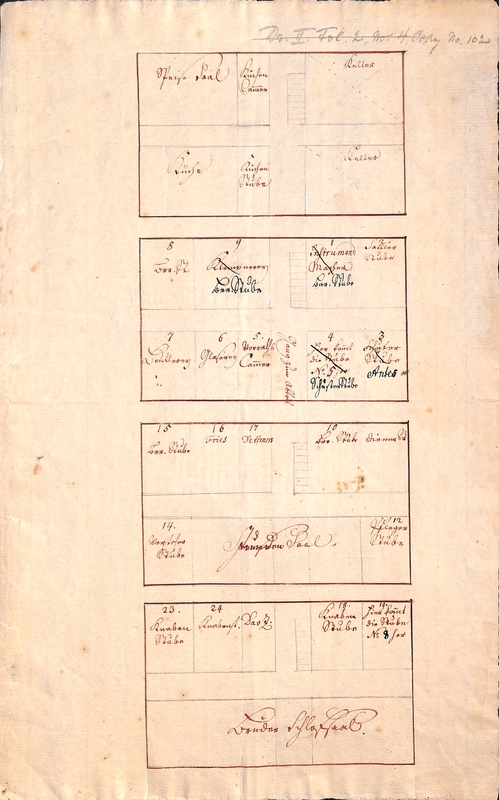
- Originally built for single men. The building contained dormitories in the top two attic levels, and workshop space, offices, kitchen and dining facilities, and a chapel for the Single Brethren’s Choir on the lower three floors.
- Originally had 86 residents.
- Some of the floors were used for school, including dormitories, refectory, classrooms, and a chapel. Many of the rooms were geared towards the specific trades or skilled crafts that occurred within the house. Some of the rooms were set aside for skilled crafts like hat making, saddle making, glove making, and tin maker. Other positions that would have their own work space in the Brethren House included the baker, glazier, blacksmith, and cobbler.
- The third floor, where the music department’s faculty offices and Music Library are now located, had a meeting room where the people in the Brethren could organize and talk through different events or topics. The third floor also contained some offices. One of the most important people on the third floor who had their own room was the Bettrner. He was in charge of the Brethren house and making sure everything ran smoothly. Another person on the third floor was the Flagger. A Flagger was a person that looked after the sick as well as to help out with church services. The final important person was the Superintendent. He was in charge of the educational aspects of the building.
- One thing to note as well is that one of the rooms on the third floor was kept open for missionaries to stay and sleep as they were traveling along during their course of work.
- By 1815 the population of the Single Brethren’s House had dwindled, while the Seminary had grown to 100 students, and as a result, the Moravian Church decided to remodel and convey the building and six adjacent acres of land to the Moravian Seminary for Young Ladies.
- When the Moravian Seminary for young ladies was moved to this space the following year, the building was renamed Colonial Hall, and for the next several decades, became the hub in which all of the functions of the school were located, including dormitories, the refectory, classrooms, administrative offices, a second-floor library, and the chapel.
- As the population of the Ladies’ Seminary increased, additional buildings were constructed, and some of the above mentioned functions were moved out of the Single Brethren’s House and into these buildings instead.
- The Single Brethren’s House remains in use for classroom and office spaces, though, now functioning as the primary location of the Moravian Music Department.