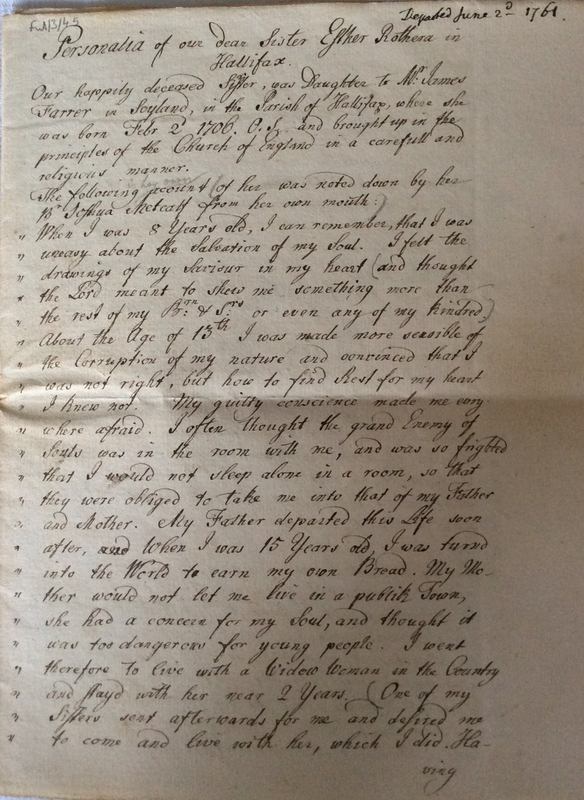
Esther Rothera was a Moravian woman from Halifax, England, born in 1706, who spent much of her life searching for spiritual peace and struggling with feelings of sinfulness and inner anxiety. After hearing Moravian preachers, she found comfort in their message of salvation through Jesus and became deeply devoted to the Moravian community. Despite years of severe illness and physical suffering, she was remembered for her cheerfulness, humility, honesty, and compassion toward others. Near the end of her life, she spoke peacefully about her approaching death and her longing to be with her Savior. She died in 1761, and the account presents her as an example of faithful Christian devotion and spiritual peace.
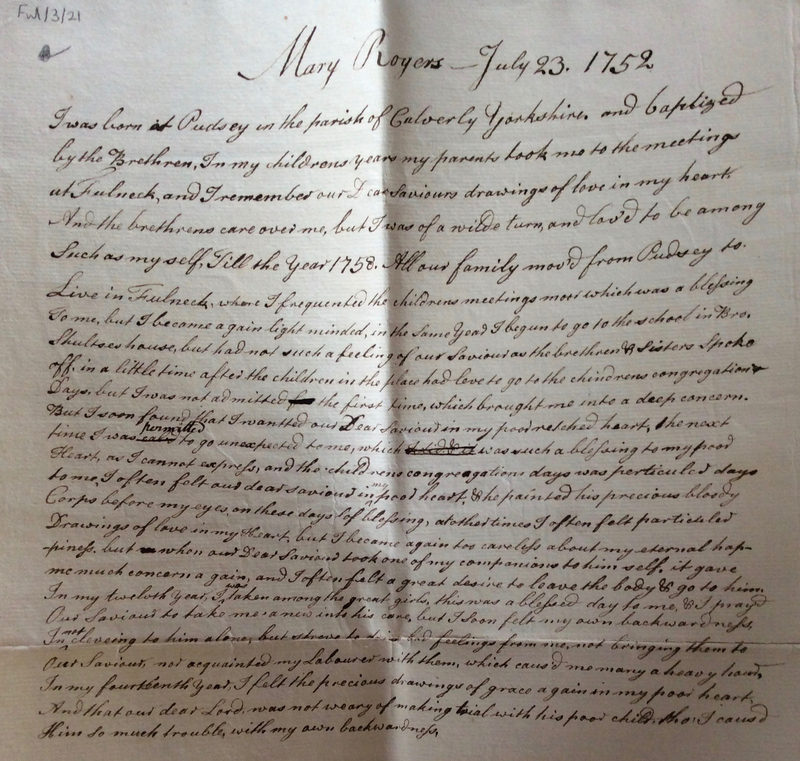
This memoir tells the story of a young Moravian woman from Pudsey, Yorkshire, who was baptized and raised within the Moravian community at Fulneck. As a child she struggled between spiritual devotion and a “wild” and careless nature, yet repeatedly felt drawn back to the Savior through church meetings, hymns, and the care of the Brethren and Sisters. In her teenage years she developed a long and painful illness that deepened her faith and longing for heaven. She found comfort in prayer, scripture, and visits from members of the congregation, often speaking about angels and her desire to be with Jesus. Near the end of her life, she peacefully called upon the Savior to “come and fetch” her, and she died calmly and joyfully in her nineteenth year, surrounded by her family and fellow believers.
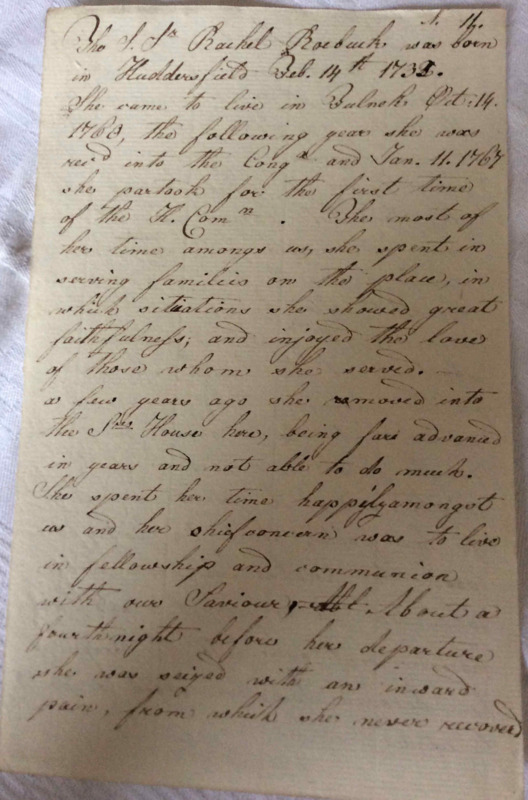
Rachel Roebuck was born in Huddersfield in 1735 and joined the Moravian community at Fulneck in 1760. She became a member of the congregation the following year and later received Holy Communion for the first time in 1767. Much of her life was spent faithfully serving families within the community, where she earned the affection and respect of those around her. In her later years, she moved into the Sisters’ House at Fulneck, where her greatest joy was remaining in close fellowship with the Savior. Shortly before her death, she became ill with severe internal pain and breathing difficulties, yet she peacefully accepted that she would soon die and looked forward joyfully to being with Christ. On December 31, 1812, at nearly 80 years old, she died calmly and happily, believing that her Savior had come to take her home.
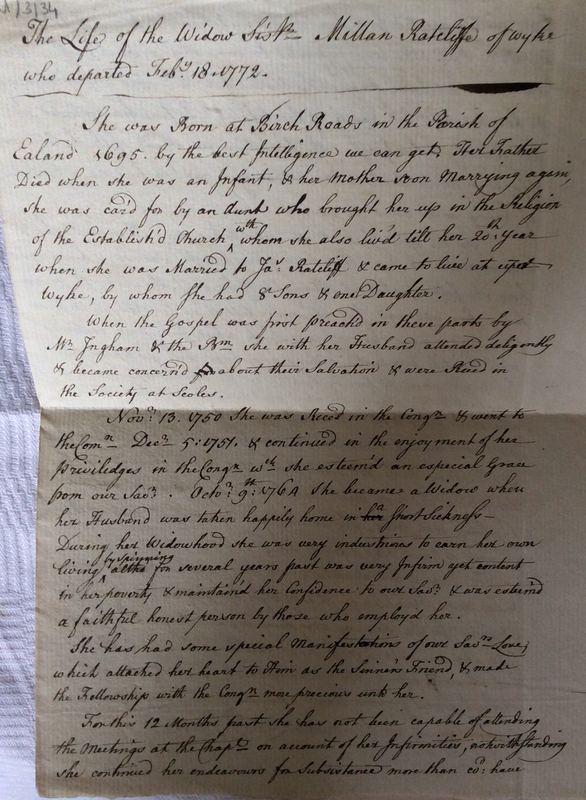
Millan Ratcliffe was born in 1695 in the parish of Ealand and was raised in the Church of England after the early death of her father. After marrying James Ratcliffe and raising nine children, she and her husband became devoted followers of the Moravian movement through the preaching of Mr. Ingham and the Brethren. She was received into the Moravian congregation in 1750 and remained deeply attached to the fellowship and to the Savior throughout her life. Widowed in 1769, she lived in poverty and frail health but continued supporting herself through spinning and was respected for her honesty, industriousness, and steadfast faith. In her final years she could no longer attend chapel services regularly, yet remained spiritually content and grateful for the care of the congregation. She died peacefully and unexpectedly on February 18, 1772, at about 77 years old, calmly believing herself ready to enter the arms of her “Eternal Bridegroom.”
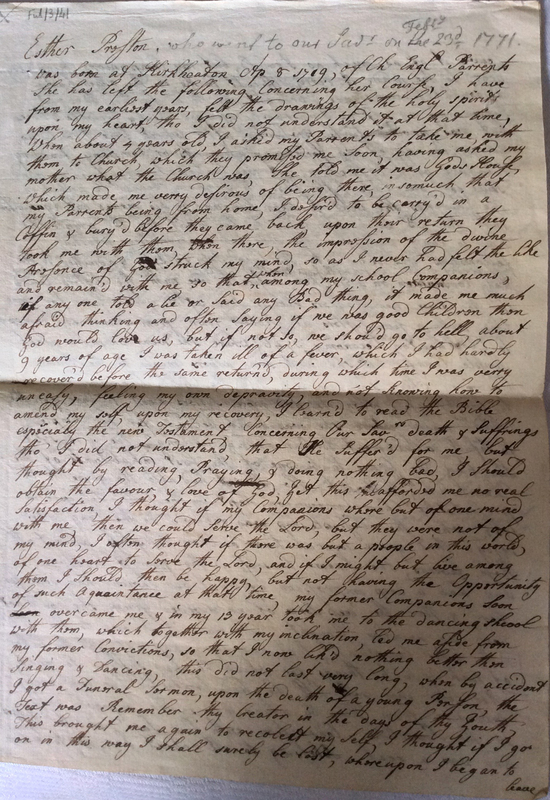
Esther Preston, born in 1719 at Kirkheaton, was raised in the Church of England and from early childhood felt a strong spiritual longing and fear of displeasing God. As a young girl she struggled between religious devotion and worldly amusements, but eventually found the spiritual community she had always desired through the preaching of Mr. Ingham and the Moravian Brethren. She joined the Moravian congregation in 1744 and devoted her life to serving within the Sisters’ communities at places such as Cleckheaton and Fulneck, where she became known for her simplicity, humility, faithfulness, and close personal devotion to the Savior. She was especially admired for her honesty about her spiritual struggles and her loving care toward others, particularly the sick. After suffering a stroke-like illness that left her speechless and weak, she died peacefully in February 1771, remembered by the congregation as a deeply sincere and “happy sinner” devoted to Christ.
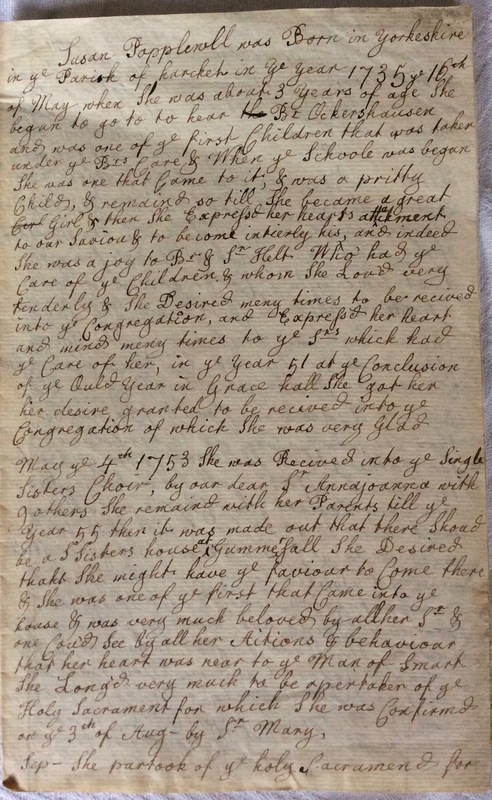
Susan Popplewell was born in Yorkshire in 1735 and from early childhood was raised within the Moravian community, attending the Brethren’s school and meetings under their care. As she grew older, she became deeply devoted to the Savior and eagerly desired full membership in the congregation, eventually joining both the congregation and later the Single Sisters’ Choir at Gomersal. She was greatly loved for her gentle character, spiritual devotion, and longing to live entirely for Christ. After becoming ill with severe pain and swelling, she endured her suffering patiently and increasingly expressed her joyful desire to leave earthly life and be united with her “Eternal Bridegroom.” Surrounded by fellow sisters praying and singing hymns, she died peacefully on August 12, believing she was going into the loving arms of her Savior.
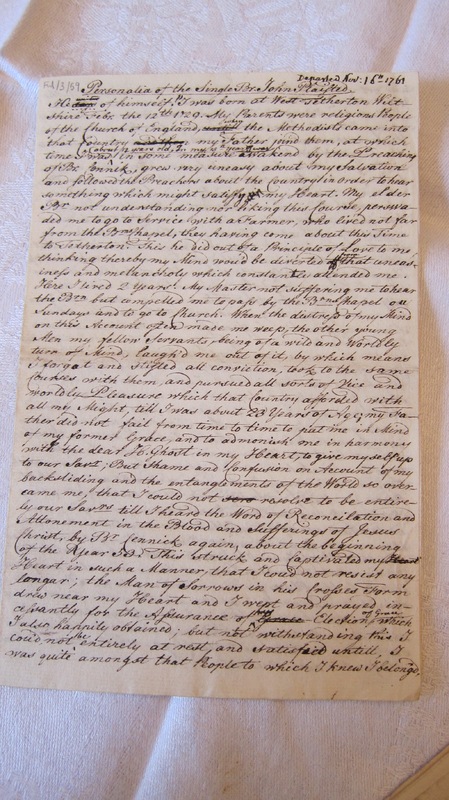
This memoir recounts the life and death of John Plaisted, a Moravian Single Brother born in Wiltshire in 1729. Raised first in the Church of England and later influenced by Methodism, he experienced deep spiritual anxiety as a teenager after hearing the preaching of Moravian evangelist John Cennick. Although he briefly abandoned his religious convictions for worldly pleasures under the influence of his companions, he later returned to faith after again hearing about salvation through Christ’s suffering and atonement. He eventually joined the Moravian Brethren, finding great joy and spiritual fulfillment living among the Single Brethren communities at Foxham, Titherton, and finally Lambshill, where he served faithfully as cook and was admired for his simplicity, honesty, tenderness, and devotion to the “Man of Sorrows.” John often spoke of his longing to leave earthly life and be united with the Savior. In November 1761 he became seriously ill with smallpox, but throughout his suffering he remained joyful and certain that Christ was calling him home. Surrounded by hymns, prayers, and fellow Brethren, he died peacefully on November 16, 1761, believing his soul was entering the pierced heart of Jesus
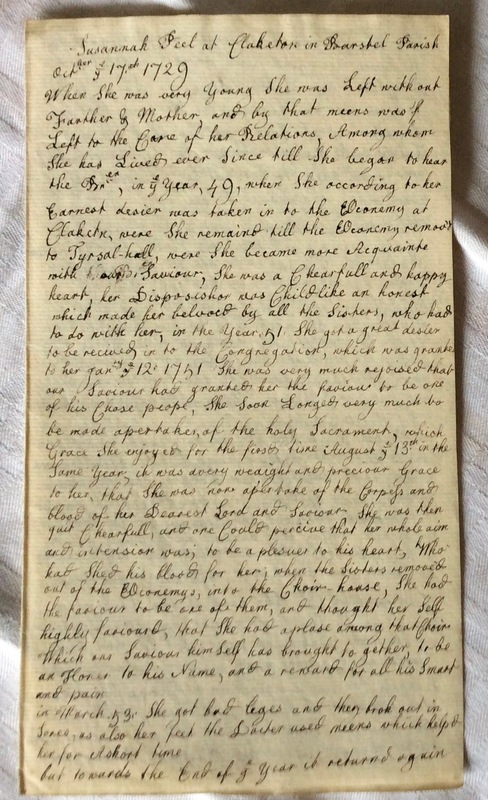
Susannah Peel, born in 1729, was orphaned at a young age and raised by relatives until she joined the Moravian community in 1749 at Cleckheaton. She quickly became known for her cheerful, honest, and childlike spirit, and she rejoiced deeply when she was admitted into the congregation and later allowed to receive Holy Communion. Susannah viewed her place among the Sisters’ Choir as a special gift from the Savior and devoted herself wholeheartedly to Christ, whom she often called her “Bridegroom” and “Lover.” Beginning in 1753 she suffered from recurring painful sores and later a serious lung illness, yet she remained patient and rarely complained, instead longing to be united with the Savior in heaven. During her final illness she spoke tenderly about Christ’s nearness, joyfully anticipated death, and peacefully passed away after receiving the blessing of her Choir Sisters, believing she was entering the open arms of her eternal Bridegroom.
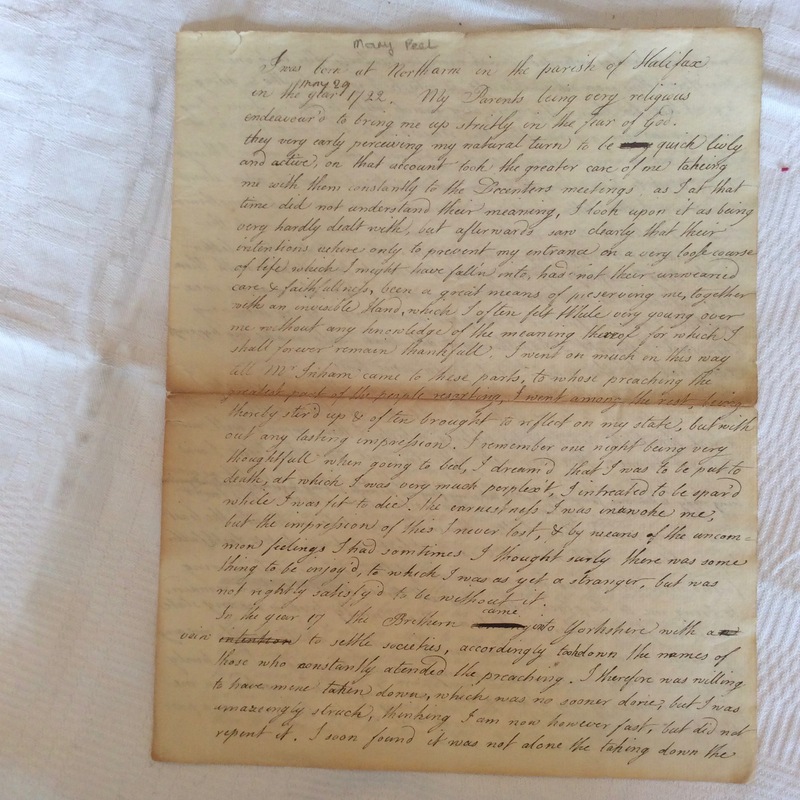
This memoir tells the story of a Moravian sister born in Halifax in 1722 who was raised by deeply religious parents and brought up among Dissenters before becoming drawn to the Moravian Brethren through the preaching of Mr. Ingham. From a young age she experienced spiritual anxiety and a longing for deeper religious fulfillment, eventually joining Moravian bands and the congregation in the 1740s. She became one of the early members of several Moravian Sisters’ Oeconomies, including Oxhaighs, Littlemoor, Conhouse, and Fulneck, where she struggled continually with feelings of unworthiness and inner corruption but also experienced profound comfort and closeness with Christ, whom she described as her intimate friend and Savior. Throughout her life she sought spiritual renewal through obedience, fellowship, and communion, learning to rely fully on divine grace rather than her own efforts. Later she briefly relocated to Bedford out of obedience to the congregation before returning to Fulneck because of difficulties and declining health. The memoir combines her own autobiographical reflections with later biographical commentary from the community.
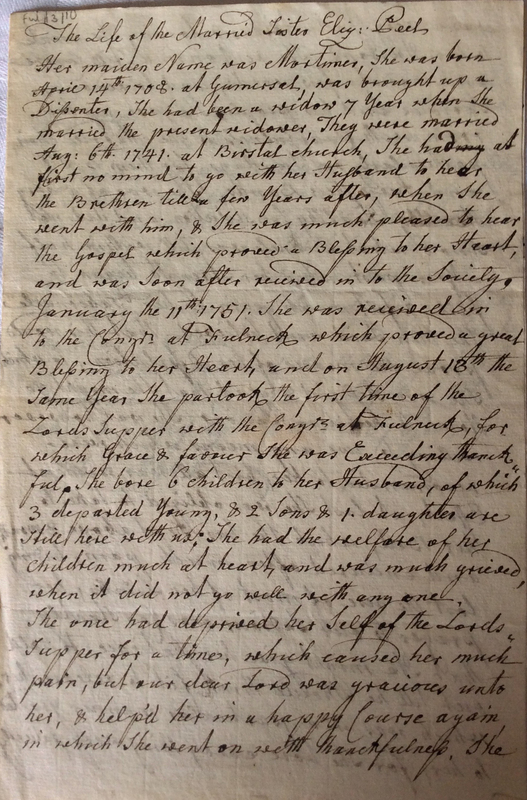
Elizabeth Peel, born Elizabeth Mortimer in 1708 at Gomersal, was raised as a Dissenter and later married a widower, eventually becoming connected with the Moravian Brethren through her husband. After hearing the Brethren preach, she became deeply devoted to their message and was received into the Moravian congregation at Fulneck in 1751, later participating gratefully in Holy Communion. She was remembered as a quiet, industrious, and loving wife and mother who cared deeply for the spiritual welfare of her children and faithfully supported both her husband and the congregation. In her later years she suffered a long illness that left her bedridden and in pain, yet she endured patiently, praying constantly for strength and release into the presence of her Savior. Surrounded by her husband and congregation, she died peacefully at age 67 after receiving their blessing and comfort.
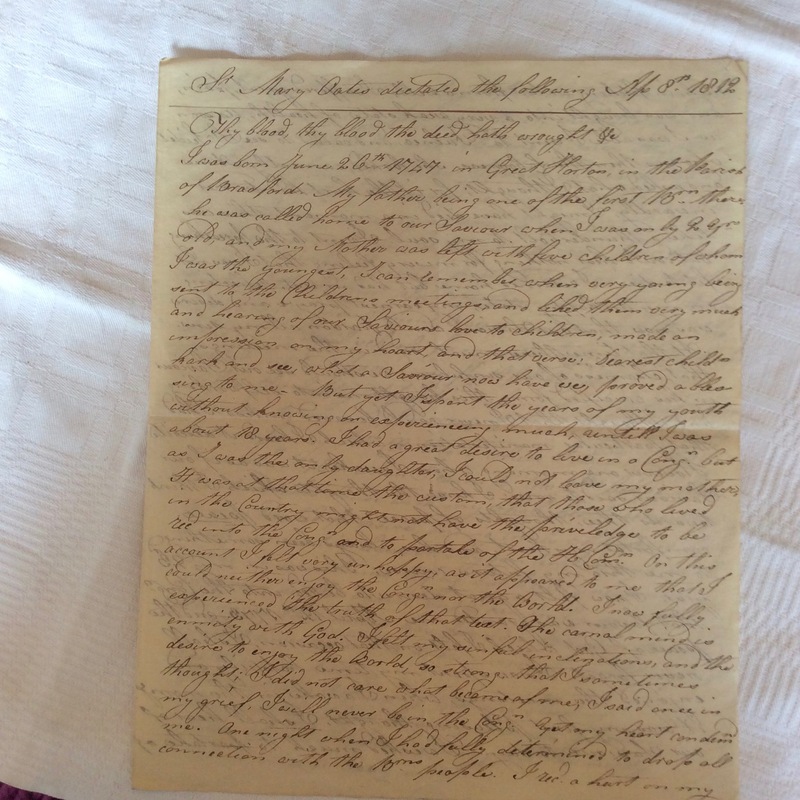
Mary Oates, born in 1747 near Bradford, was raised in a Moravian family after the early death of her father and developed a deep attachment to the Moravian meetings and teachings from childhood. As a young woman she struggled between worldly desires and her longing for spiritual peace, at one point considering leaving the Moravian community entirely. After a serious injury and a period of emotional distress, she experienced a renewed sense of Christ’s forgiveness and peace, eventually joining the congregation in 1773 and later receiving Holy Communion for the first time in 1776. Much of her life was spent caring for family members and serving within the Sisters’ House, where she found spiritual growth, comfort, and a stronger understanding of herself and the Savior. Though she endured personal losses and emotional trials, she continually trusted in Christ’s guidance and ended her account by praying for the blessing and salvation of her family and friends.
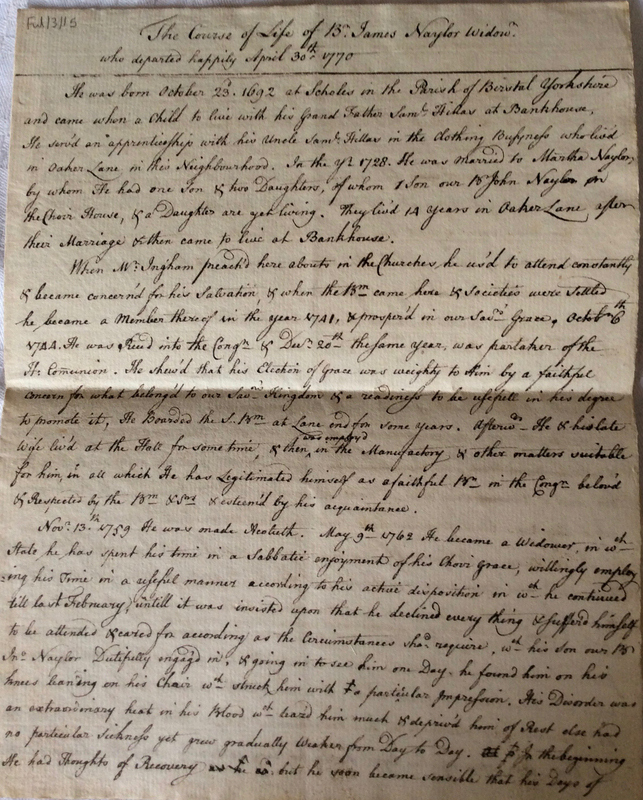
James Naylor, born in Yorkshire in 1692, was a Moravian widower and faithful member of the congregation who spent much of his life working in the clothing trade and supporting the Moravian community through both practical service and spiritual devotion. After hearing the preaching of Mr. Ingham and later joining the Moravian Brethren in the 1740s, he became deeply committed to the congregation, participating in communion and serving in various roles with honesty, diligence, and humility. Widowed in 1762, he devoted his later years to a quiet and spiritually focused life, remaining active and useful as long as his health allowed. During his final illness in 1770, he spoke tenderly to his family about loving the Savior and one another, while peacefully longing to “go home” to Christ. Surrounded by hymns, blessings, and the care of his family and fellow believers, he died calmly and serenely at age 77, remembered as a faithful and beloved brother in the Moravian community.
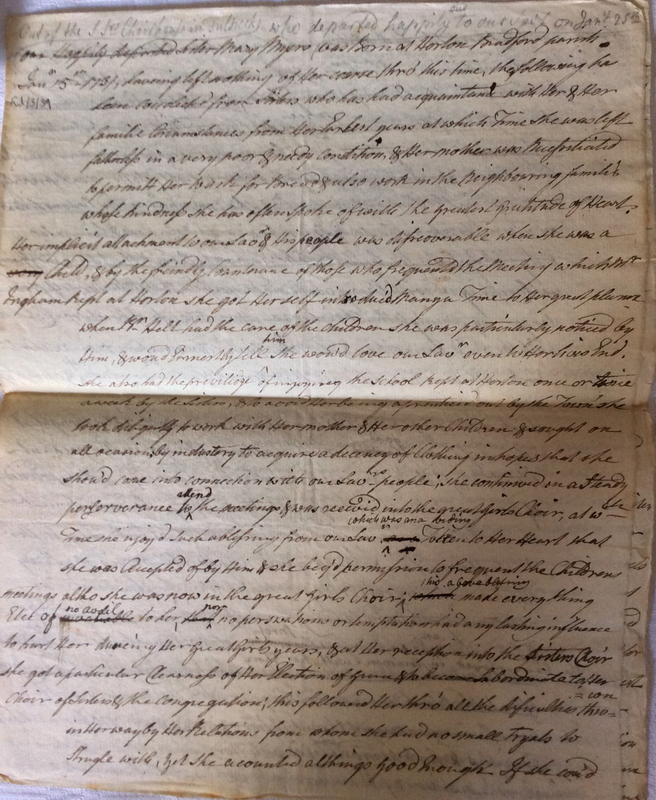
Mary Myers, born in 1731 near Bradford, was raised in poverty after losing her father as a child, yet from an early age she developed a deep attachment to the Moravian community and a strong devotion to the Savior. Through hard work, perseverance, and faithful attendance at Moravian meetings, she eventually joined the congregation and later the Sisters’ Choir, where she became known for her humility, diligence, spiritual seriousness, and steadfast commitment to Christ. Despite difficult family circumstances and recurring poor health, she remained grateful, disciplined, and devoted to the fellowship of the Sisters, eventually serving in leadership roles within the choir. In her final illness she spoke peacefully and lovingly about her desire to be united with her “Souls Bridegroom,” expressing gratitude for the grace she had received throughout her life. After receiving Holy Communion one last time, she died calmly and serenely, believing she was entering the arms of her Savior.
Sarah Mortimer, born in 1780 in Yorkshire, lost her mother as an infant and was raised by a Moravian couple who nurtured her both physically and spiritually. From childhood she was deeply influenced by Moravian schools, hymns, and teachings about the Savior’s love, eventually joining the Moravian congregation and later the Single Sisters’ Choir. She faithfully served the community, including caring for and instructing young girls at Gomersal, and became known for her obedience, humility, and strong reliance on Christ through both spiritual and financial hardships. In her final years she suffered from declining health caused by a severe lung illness, yet remained patient, grateful, and devoted to the Savior, frequently praying for forgiveness and purification through Christ’s blood. After enduring her illness with faith and resignation, she died peacefully at Fulneck in January 1811 at the age of 30, believing she was finally going to see her Savior face to face.
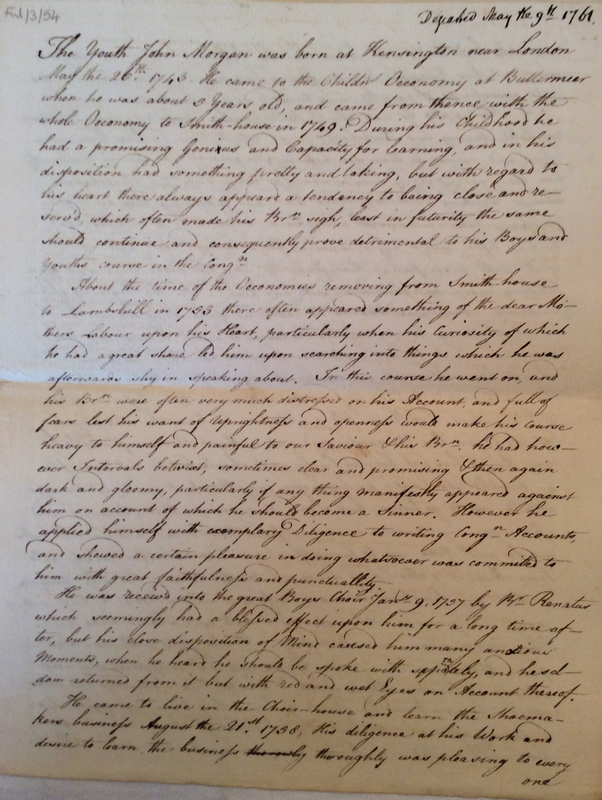
John Morgan, born near London in 1743, was raised from early childhood in Moravian educational communities at Buttermeer, Smith House, and Lambshill, where he was recognized as intelligent, diligent, and gifted in learning. Although he was often reserved and struggled with openness and emotional warmth in his spiritual life, he gradually became more sincere and connected to the Savior as he matured. He faithfully worked in the choir house learning shoemaking and was respected for his obedience, careful work, and desire to improve despite poor eyesight and recurring inner anxieties. During a serious illness in 1761, John reflected deeply on his spiritual condition, expressing both humility about his shortcomings and confidence that Christ would receive him. Near the end of his life he peacefully accepted death as his Savior’s call “home,” and he died tenderly and calmly at age 17 while the congregation was celebrating Holy Communion.
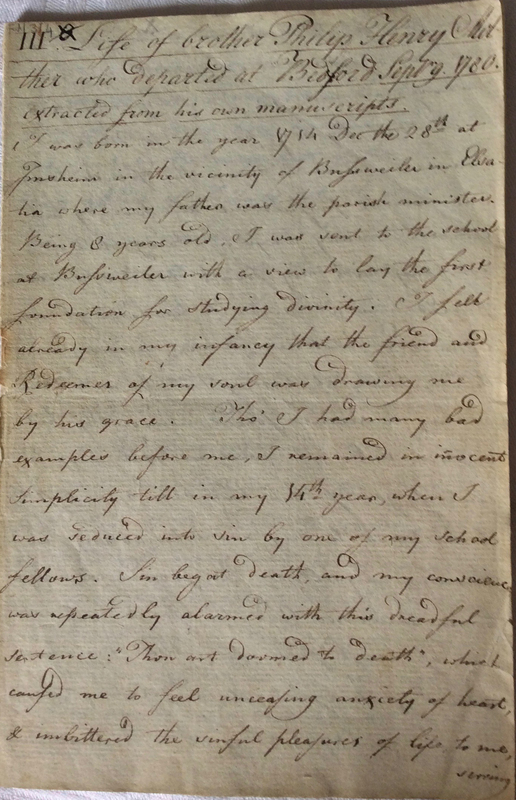
Philip Henry Molther, born in 1714 in Alsace, was raised in a Lutheran minister’s family and from childhood experienced deep spiritual anxiety and a longing for salvation. After years of inner struggle, university study, and religious searching, he underwent a profound spiritual awakening through the Moravian Brethren and devoted his life to their church and missionary work. He became a minister, translator, hymn writer, and leader within the Moravian movement, serving congregations across Germany, Switzerland, England, Ireland, and Neuwied, where he helped establish and guide a thriving French Moravian congregation despite years of hardship and uncertainty. Married with seven children, Molther remained deeply committed to Christ and the Moravian Church throughout his life, eventually becoming a bishop in 1775. In his later years he suffered blindness and paralysis but endured his illnesses faithfully and peacefully, dying in Bedford in 1780 at the age of 66, remembered as a devoted servant of Christ and influential Moravian leader.
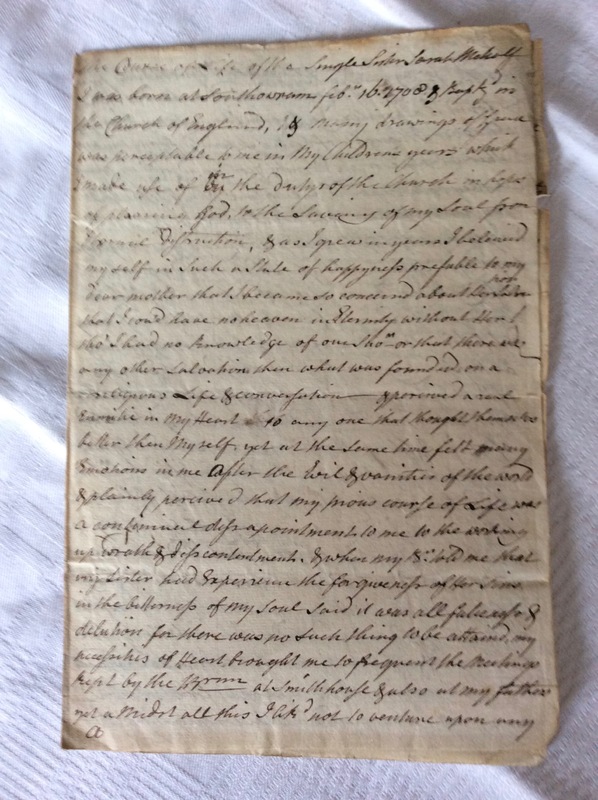
Sarah Metcalf, born in 1708 at Southowram, was raised in the Church of England and from childhood sought salvation through religious devotion and good works, though she struggled inwardly with pride, spiritual dissatisfaction, and fear for the souls of her family members. Through attending Moravian meetings and hearing the preaching of the Brethren, especially Spangenberg, she gradually came to believe in salvation through Christ’s grace rather than her own righteousness. After a powerful spiritual experience in which she felt both terror over her sinful condition and comfort in Christ’s redeeming love, she joined the Moravian congregation in 1748 and later became part of several Sisters’ Oeconomies and eventually the Choir House. Despite poor health and a constant sense of her own unworthiness, she found deep joy and comfort in Holy Communion, fellowship with the Sisters, and a humble, “sinnerlike” dependence on the Savior’s mercy and sacrifice.
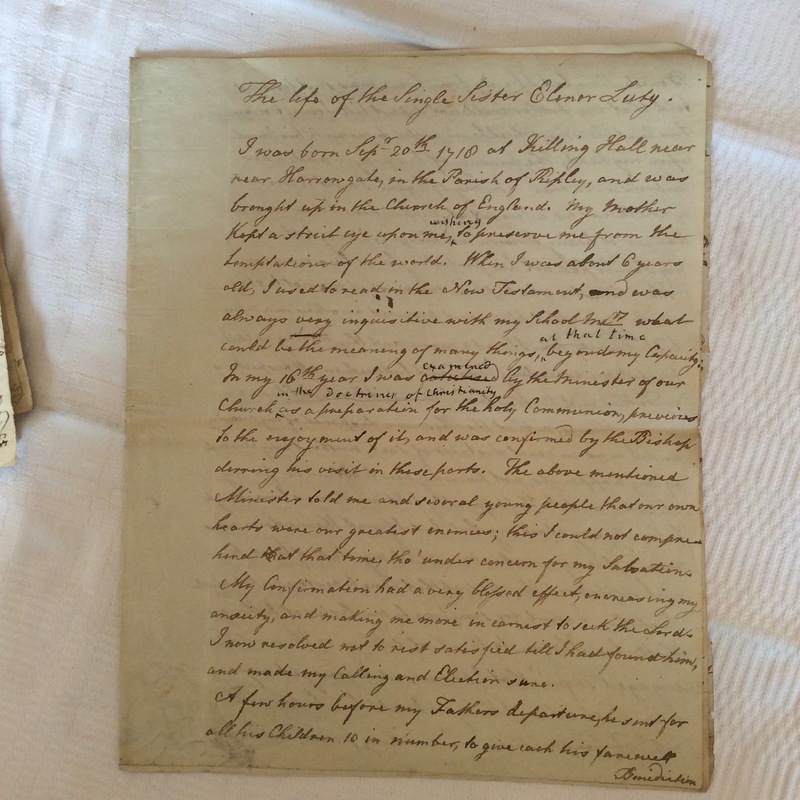
This memoir tells the story of a Moravian sister born in 1718 near Harrogate who was raised in the Church of England and from an early age longed for spiritual assurance and salvation. After years of inner struggle, difficult service positions, a broken engagement, and disappointment with worldly life, she eventually found the Moravian community at Pudsey and Fulneck, where she experienced deep gratitude and spiritual fulfillment. Though she continued to wrestle with self-righteousness, anxiety, and personal weaknesses, she came to rely fully on Christ’s grace and devoted herself to the life of the Single Sisters’ community. Later in life she endured physical infirmities and declining mental strength, yet remained confident in her Savior’s love and peacefully anticipated death. She died calmly in her eighty-first year, believing herself safely in the care of Christ.
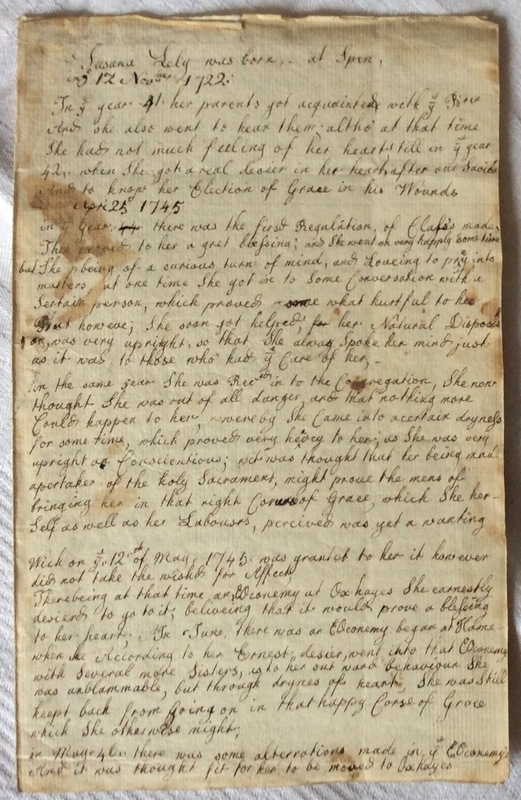
Susana Lily, born in 1722 at Spen, became connected with the Moravian Brethren in the early 1740s and gradually developed a deep spiritual devotion to Christ after struggling for years with feelings of spiritual dryness and uncertainty. Through life in various Moravian Sisters’ Oeconomies and participation in Holy Communion, she eventually experienced a profound sense of grace and closeness to the Savior, which transformed her spiritual life and brought her lasting joy. She faithfully served the community for many years, especially through cooking and caring for the Sisters, despite suffering repeated injuries, chronic weakness, and worsening illness. Even as her health declined, she remained patient, deeply attached to the Moravian congregation and her Choir, and joyfully longed to be united with her “everlasting Bridegroom.”
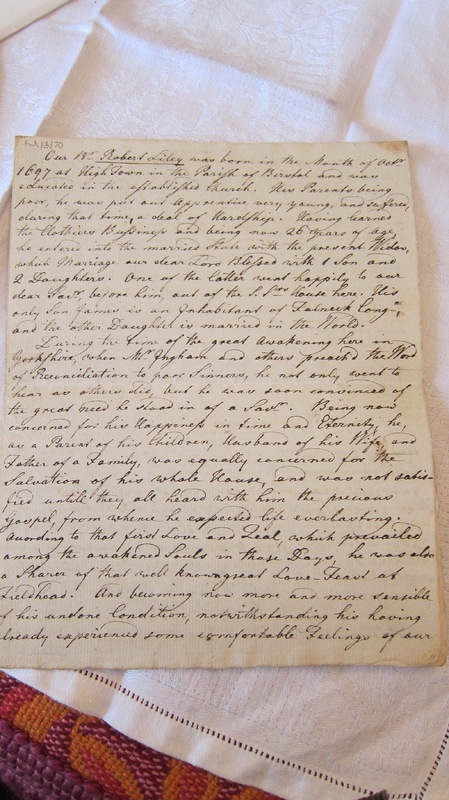
Robert Lilley, born in Yorkshire in 1697, was raised in the Church of England and worked as a clothier after enduring a difficult apprenticeship in poverty. During the evangelical awakenings led by Mr. Ingham and the Moravian Brethren, he became deeply concerned for both his own salvation and the spiritual welfare of his entire family, eventually joining the Moravian congregation in 1748. He was especially devoted to Holy Communion and viewed participation in it with deep humility and reverence. In 1759 he and his wife moved permanently to Fulneck, where he lived a quiet and faithful life marked by tenderness toward the Savior, gratitude for grace, and increasing longing for heaven as he grew older. Near the end of his life he often wept “tears of love” for Christ and peacefully died in 1772 at age 75 after a very brief final illness, exactly as he had hoped.
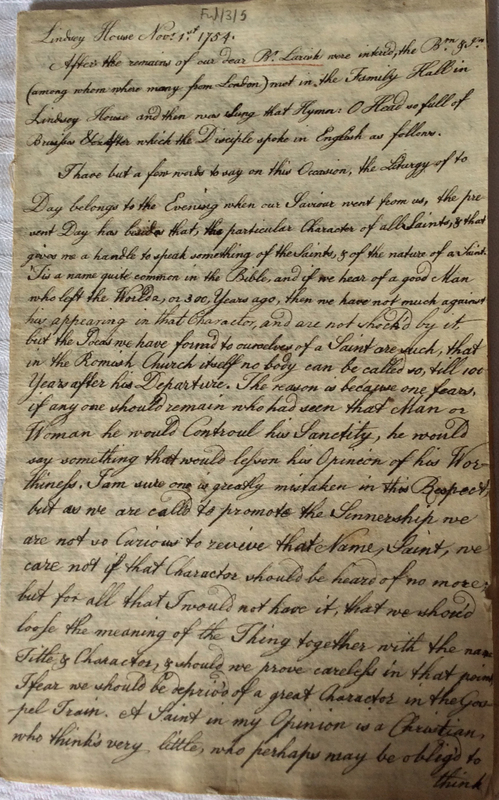
This document memorializes Charles Henry Conrad von Larish, a Moravian nobleman born in 1711 in Silesia who gave up his estates and worldly status to devote himself entirely to the Moravian Church and the service of Christ. The account praises his humility, simplicity, faithfulness, and childlike spirituality, describing him as a true “saint” whose life reflected deep love for the Savior rather than worldly ambition or learning. After joining the Moravian congregation in the 1730s, Larish served faithfully in England, Holland, Germany, and other Moravian communities alongside his wife Diana Raymond, despite constant illness and financial difficulties. In his final sickness in 1754, he calmly and joyfully anticipated death, repeatedly expressing his longing to go “home” to the Savior. Surrounded by Brethren singing hymns and blessings, he died peacefully in his sleep, and the document presents his death as a heroic and spiritually triumphant example of Moravian faith and humility.
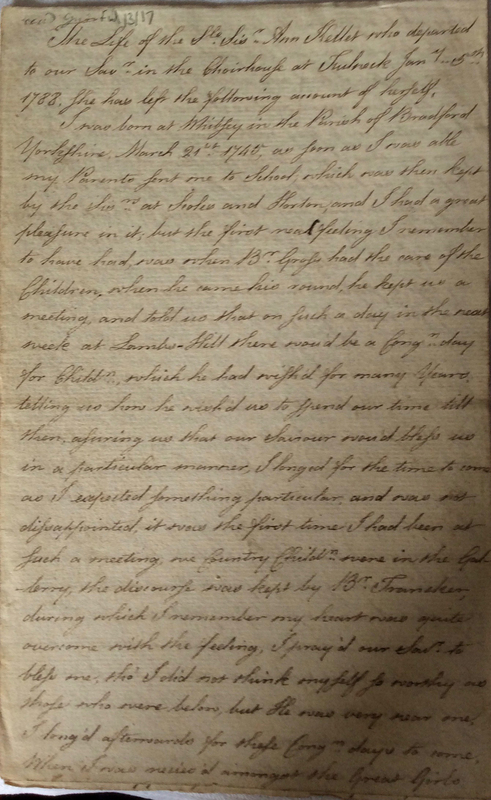
Ann Kellet, born in Yorkshire in 1745, was raised within the Moravian school system and from childhood felt deeply drawn to the Savior and the Moravian congregation. After periods of spiritual struggle, doubt, and fear about her salvation, she experienced a powerful sense of Christ’s forgiveness and devoted herself wholeheartedly to life among the Single Sisters at Fulneck. She served faithfully for many years in the children’s work, kitchen, and washhouse, finding both spiritual growth and comfort through communion, fellowship, and prayer despite many inner trials and family losses. Later in life she suffered disappointment when a hoped-for missionary call to Barbados could not be fulfilled, as well as declining health from consumption, yet she remained grateful for the Savior’s mercy and confidently anticipated eternal rest with Christ. She died peacefully in 1788 surrounded by the prayers and blessings of her Choir and congregation.
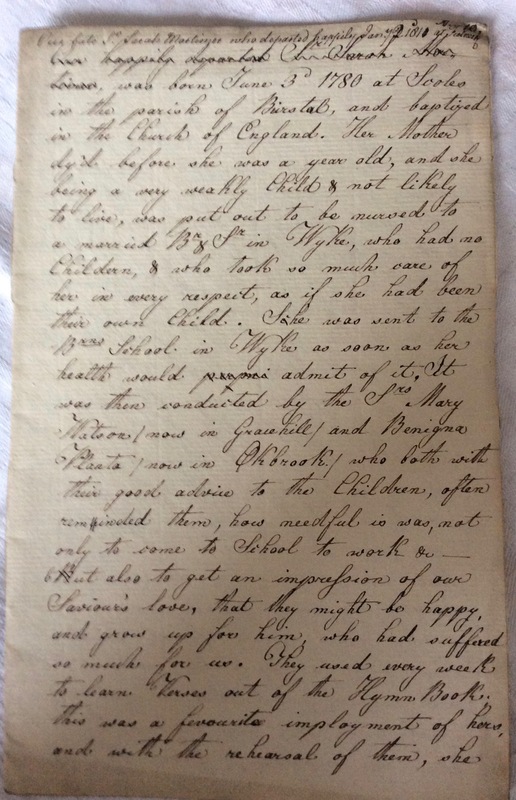
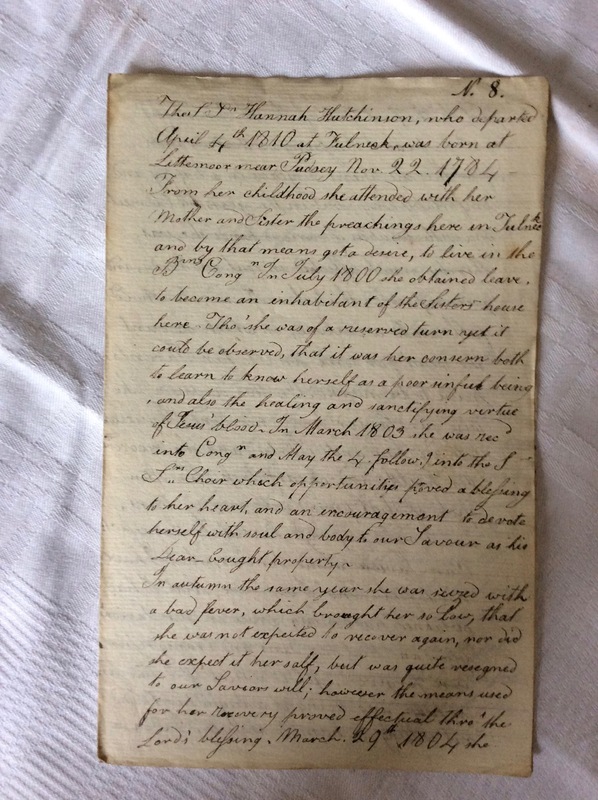
Hannah Hutchinson, born near Pudsey in 1784, was raised attending Moravian meetings at Fulneck and developed a strong desire from childhood to belong to the Moravian congregation. After joining the Sisters’ House and later the congregation and Single Sisters’ Choir, she devoted herself sincerely to the Savior despite being naturally reserved and struggling inwardly with pride, illness, and emotional trials. She survived a severe fever in 1803 and later served faithfully as a teacher in the boarding school, where she was much loved by the children in her care. Though recurring illness eventually weakened her body, she found renewed peace and assurance in Christ’s forgiveness and approached death with patience, gratitude, and resignation to God’s will. After receiving Holy Communion one final time, she died peacefully in April 1810 at only twenty-five years old, trusting fully in her Savior’s mercy.
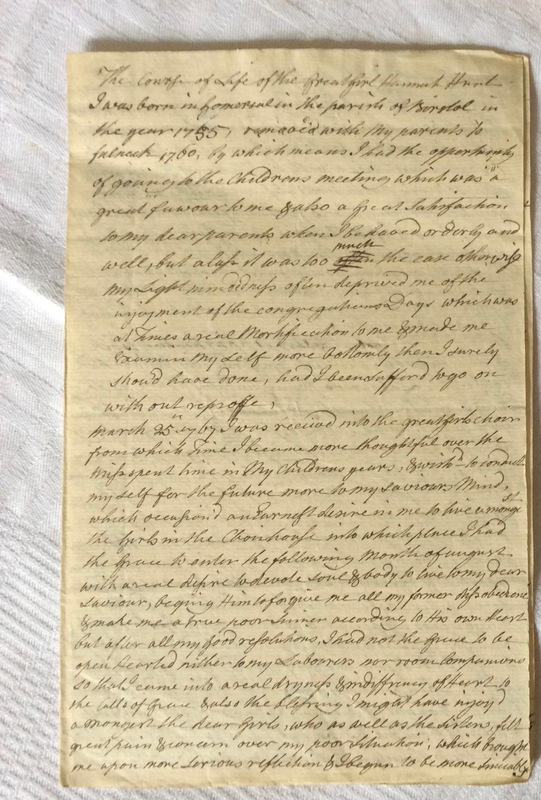
Hannah Hunt, born in 1755 in Gomersal and raised in the Moravian community at Fulneck, struggled in her early years with lightheartedness, spiritual reserve, and difficulty opening her heart to her teachers and companions despite deeply desiring to please the Savior. After joining the Great Girls’ Choir and later the congregation in 1769, she experienced a growing awareness of her spiritual condition and gradually became more humble, openhearted, and devoted to Christ. During a long illness in the sickroom, she reflected deeply on sin, grace, and salvation, finding comfort and joy in the thought of being united with her Savior. Shortly before her death, she was allowed to receive Holy Communion for the first time, which brought her profound happiness and spiritual peace. She died peacefully in July 1769 at only fourteen years old, surrounded by the blessing of her Choir and confident in Christ’s love.
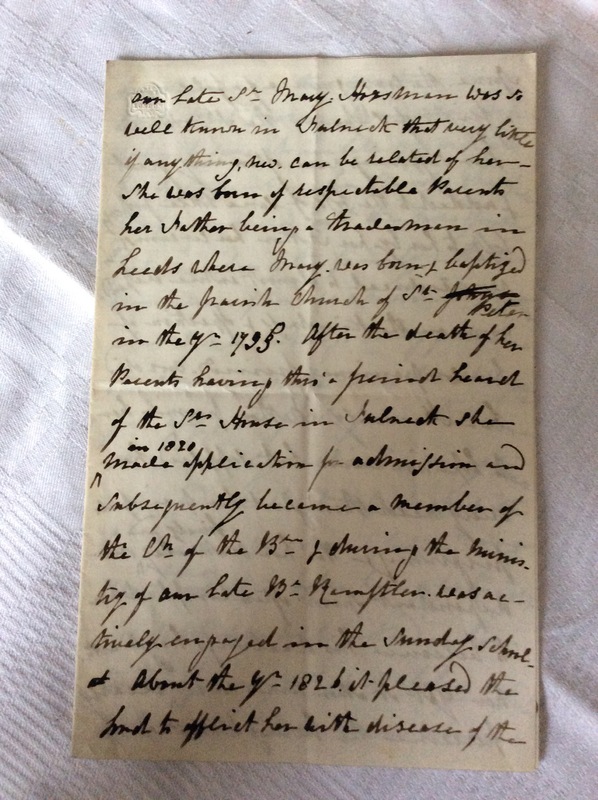
Mary Horsman, born in Leeds in 1795, joined the Moravian Sisters’ House at Fulneck in 1820 and became active in the congregation and Sunday school work. After suffering a serious spinal injury from a fall in the Sisters’ House around 1826, she endured many years of pain, physical weakness, and financial hardship, relying heavily on the kindness and support of her companions and friends. Though her naturally independent spirit sometimes made her struggles difficult to bear, she often recognized her suffering as part of the Savior’s loving care and became known for her patience, cheerfulness, and kindness toward younger members of the community. Following another fall and a final illness brought on by influenza, her health rapidly declined, and she died peacefully in the arms of her Savior in the sixtieth year of her age.