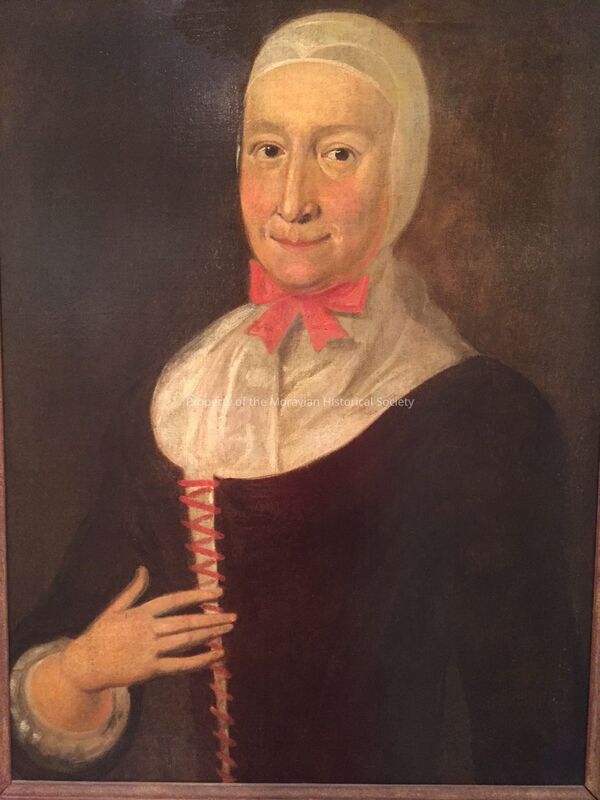
Portrait of Catherine Huber (1703-1798)
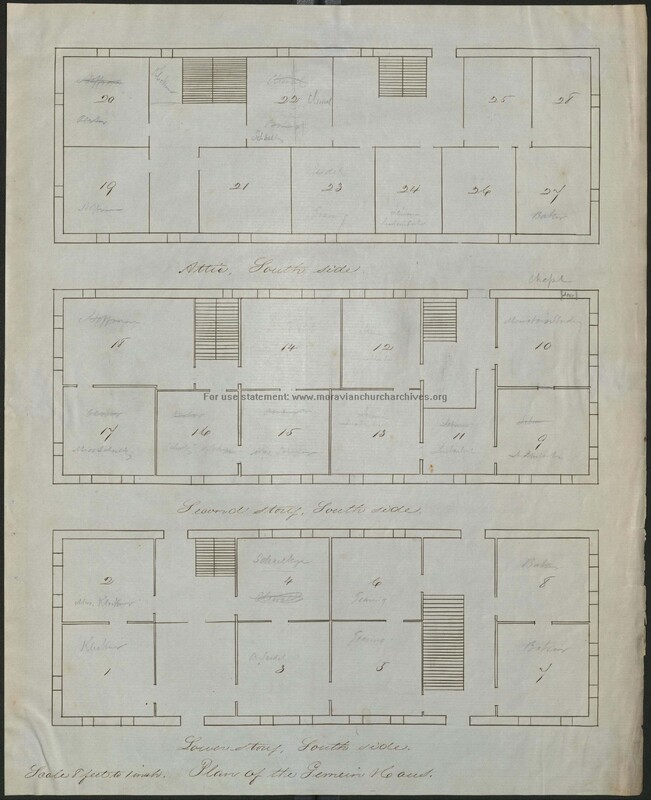
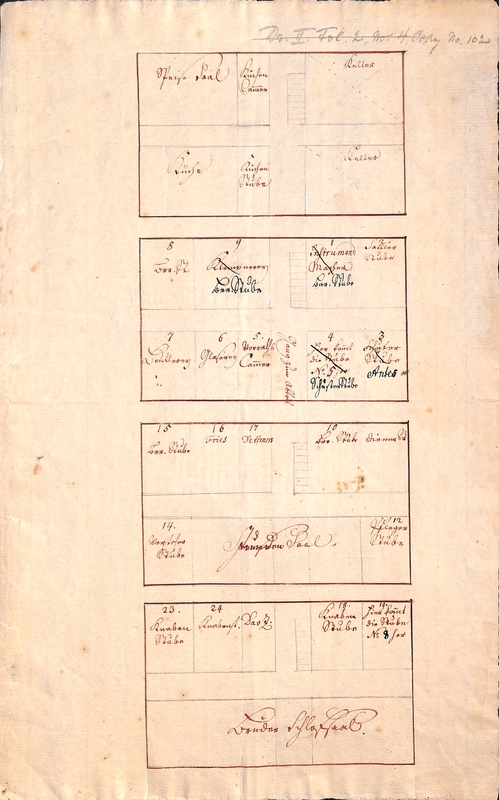
Huber moved to Nazareth during the General Economy period. She cared for the community’s sick and oversaw the nursery, which was located in this building. Children between the ages of 18 months and four years lived together in the nursery under the care of a few Single Sisters. The nursery allowed parents to contribute to the General Economy without the interruption of child rearing. Children in the nursery learned hymns by heart and practiced remaining attentive throughout religious services. At bedtime, the children sang an evening hymn.
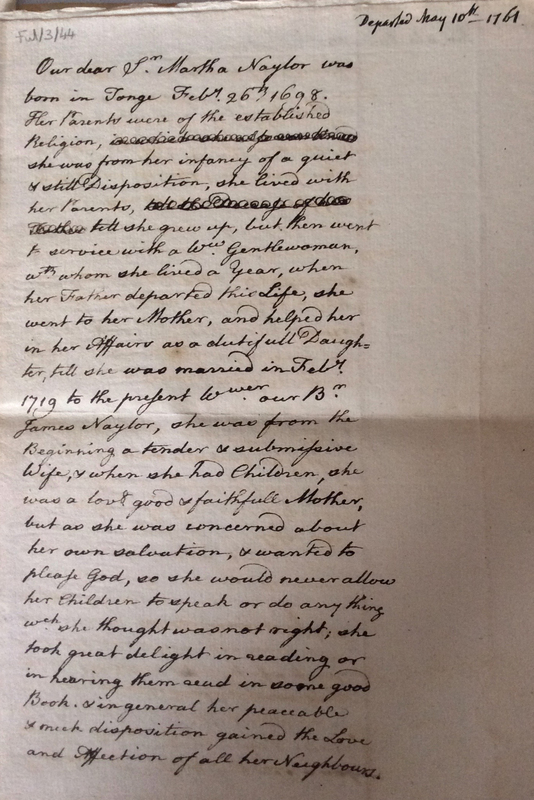
Written in English, this document is a biographical memoir of Martha Naylor (1698–1761). The narrative recounts her birth in Tong, her upbringing within the Church of England, her service in a gentleman’s household, her marriage to James Naylor in 1719, and her life as a wife and mother. The memoir emphasizes her quiet and gentle disposition, religious devotion, concern for salvation, moral guidance of her children, and love of religious reading, reflecting common themes in Moravian memorial literature.
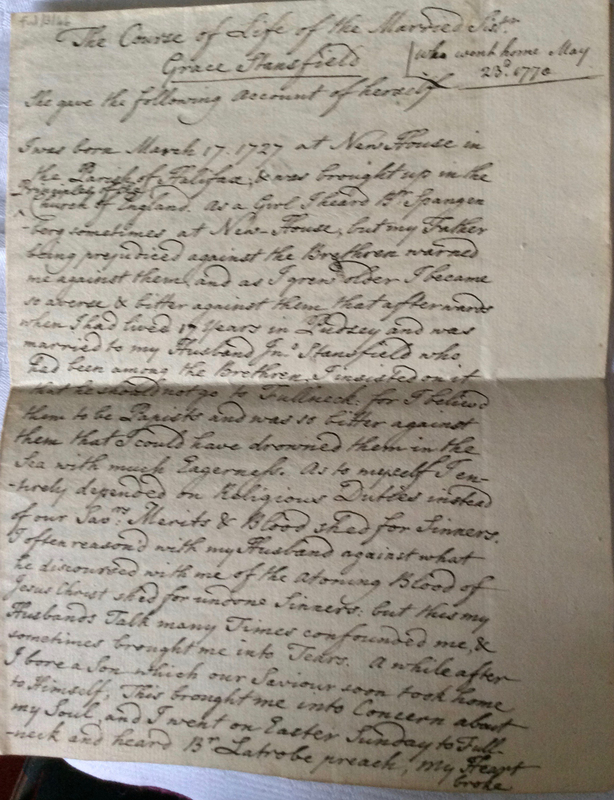
Written in English, this document is an autobiographical spiritual memoir entitled The Course of Life of the late Sister Grace Thresfield. Written in the first person, the narrative recounts Grace Thresfield’s birth in 1727, the death of her father during her childhood, her religious upbringing, and her spiritual struggles and development within the Moravian community. The memoir reflects themes common to Moravian religious literature, including repentance, salvation, prayer, religious fellowship, and devotion to Jesus Christ.
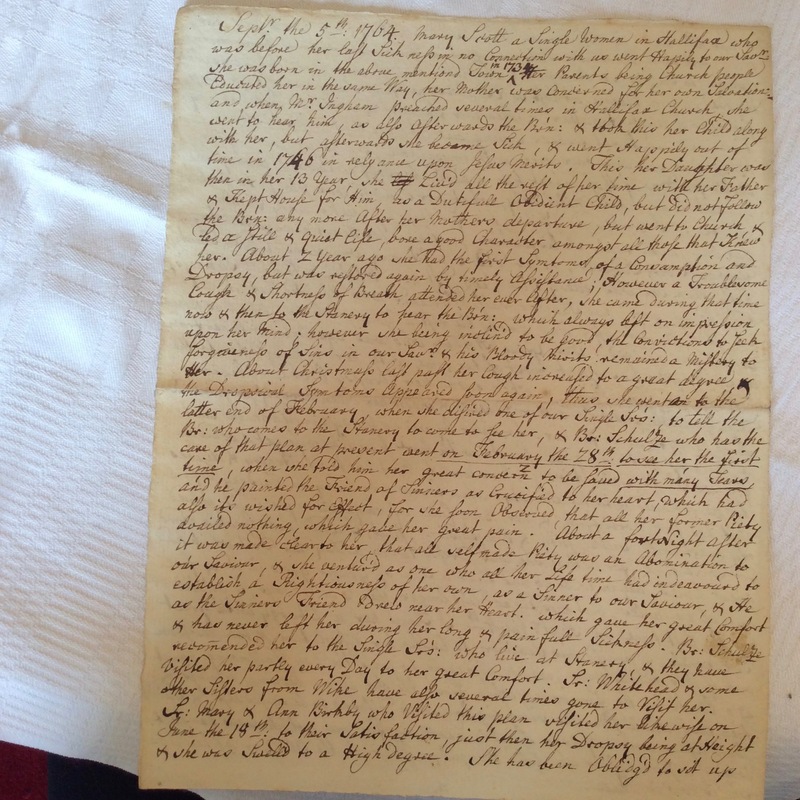
Written in English, this document is a biographical memoir of Mary Scott, a single woman associated with the Moravian community who died in 1767 after a prolonged illness. The narrative recounts her birth in Coventry, her upbringing within the Church of England, her exposure to Moravian preaching and fellowship, and her spiritual development. The memoir emphasizes themes of religious devotion, suffering, patience during illness, Christian fellowship, and preparation for death, reflecting common themes in Moravian memorial literature.
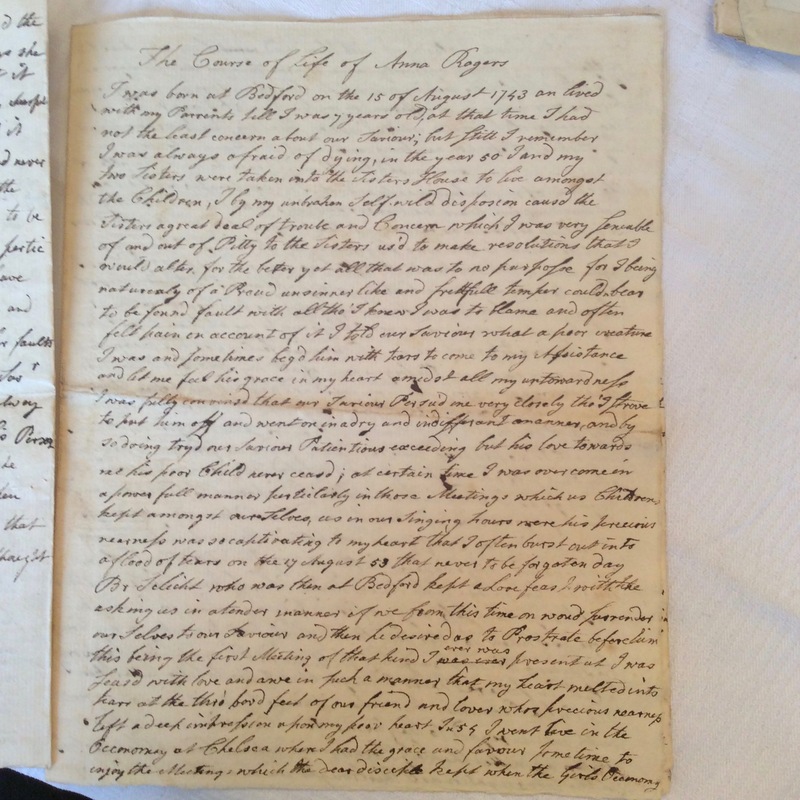
Written in English, this document is an autobiographical spiritual memoir entitled The Course of Life of Anna Rogers. Written in the first person, the narrative recounts Anna Rogers’s birth in Bedford on August 15, 1738, her childhood experiences, spiritual struggles, and religious development within the Moravian community. The memoir reflects on themes of sin, repentance, salvation, religious fellowship, and participation in Moravian devotional life, including attendance at meetings and love-feasts.
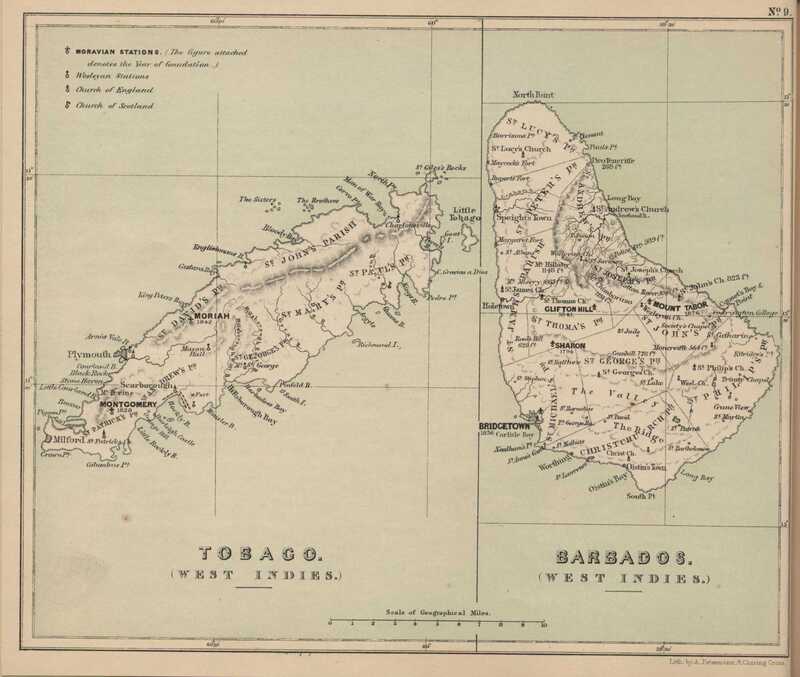
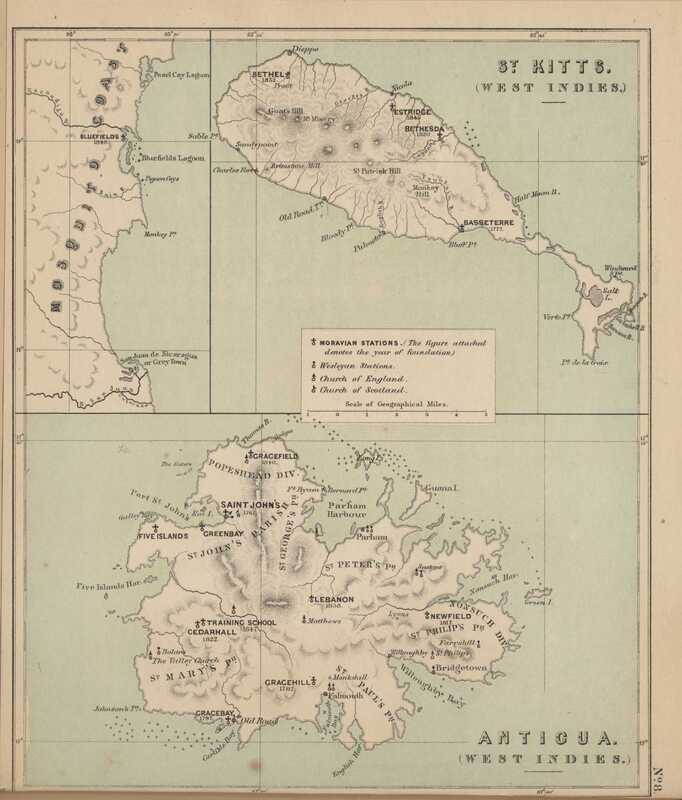
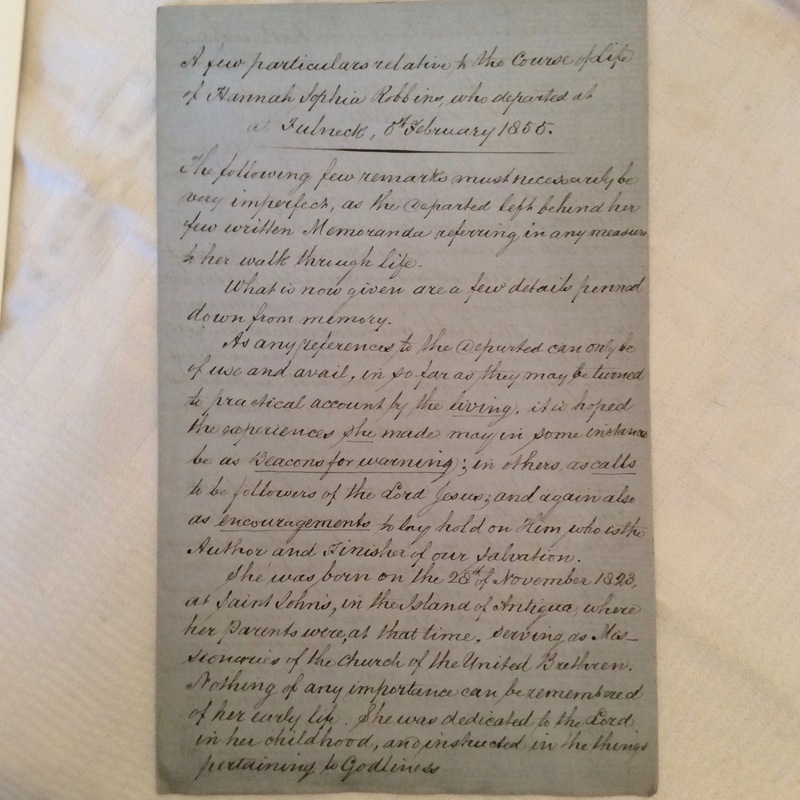
Written in English, this document is a biographical memoir of Hannah Sophia Robbins, who died at Fulneck on February 4, 1855. Compiled after her death from memory and limited written notes, the narrative recounts her birth on November 20, 1823, at Saint John’s, Antigua, where her parents were serving as Moravian missionaries with the Church of the United Brethren. The memoir describes her Christian upbringing, religious instruction from childhood, and spiritual development, emphasizing themes of faith, devotion, moral example, and salvation.
Written in English, this document is a biographical memoir of Hannah Sophia Robbins, who died at Fulneck on February 4, 1855. Compiled from memory by another author after her death, the narrative recounts her birth in 1823 at Saint John’s, Antigua, where her parents served as Moravian missionaries, and describes her childhood religious upbringing and spiritual development within the Church of the United Brethren. The memoir reflects themes of Christian devotion, missionary life, and religious instruction.