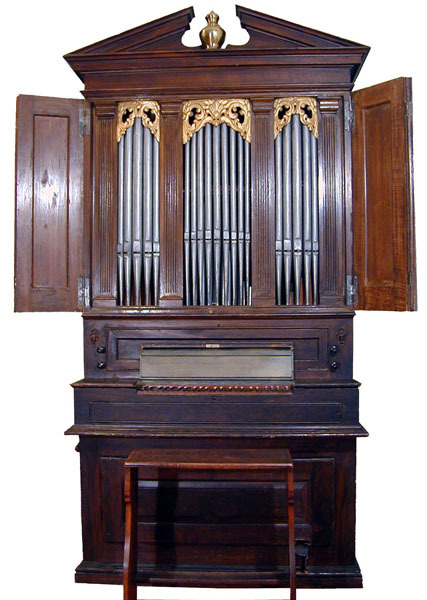
This instrument was made by David Tannenberg in Lititz, Pennsylvania for the chapel of the Single Brothers' House, Bethlehem, Pennsylvania. David Tannenberg has been called the most important organ builder in 18th century America. He lived and worked in the Moravian communities of Bethlehem, Nazareth and Lititz, and he built organs for Moravian, Lutheran and Reformed congregations. Nine Tannenberg organs still survive.
On July 25, 1782, General George Washington paid an unexpected visit to Bethlehem. The Moravian records note that he was taken to the chapel of the Single Brothers' House, provided with refreshment, and entertained with music played on the this very organ.
Around 1920, this Tanneberg organ was brought to the Whitfield House in Nazareth, PA, where remains on display to this date. The organ is still playable and largely in its original condition. It was restored in 1997 by R.J. Brunner &
Co.
Construction materials include white pine, maple, walnut, white cedar, cedar, ebony, fruitwood, ivory, leather, and metal. From the collection of the Moravian Historical Society, Nazareth, Pennsylvania.
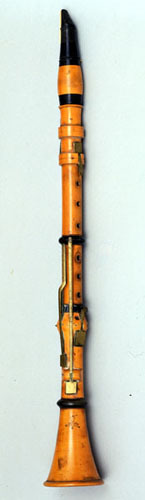
Clarinet made by Heinrich Gottlieb Gütter, c. 1820-47, in Bethlehem, Pa. This clarinet made of boxwood has ebony bands and brass trim. It is stamped "Gutter Bethlehem," with an eagle trefoil. It is pitched in C, which is stamped on each joint. From the collection of the Moravian Historical Society, Nazareth, Pennsylvania.
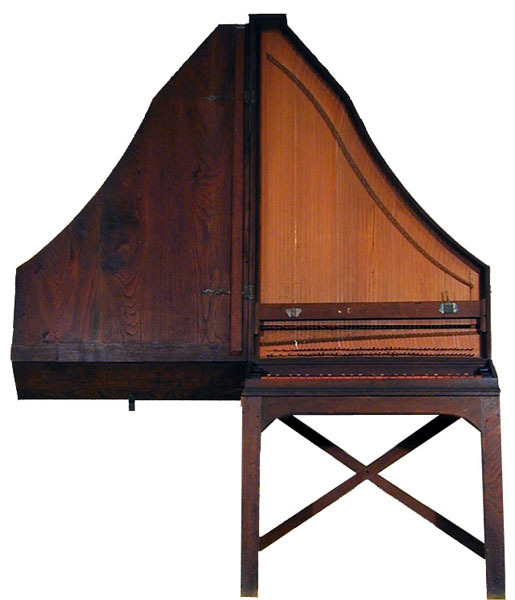
A rare example of an early piano design, this instrument has few alterations and is in excellent condition. Made of North American hardwoods, ebony, brass, leather. Scholars believe it is one of two surviving instruments made by Johann Gottlob Klemm (1690-1762)(Anglicized as John Clemm), the first
professional keyboard instrument maker in British colonial America. According to the wood analysis, this instrument was made in America. It is both one of the earliest forms of piano, and one of the earliest piano-type instruments in America.
During a smallpox epidemic in 1746, this instrument was brought to the Whitfield House in Nazareth, Pennsylvania to aid in comforting the patients from the girls' school who were being attended to there. The principal, John Christopher Pyrlaeus, thought that music would raise the spirits of those students affected by the smallpox epidemic. It reportedly has been in the building—now the Moravian Historical Society—since that time. It is not known whether the instrument was made in Germany and brought to America by the Moravians, or whether it was made in the American colonies. Fewer than ten of these instruments can be found today in the United States.
Unknown maker and date. From the collection of the Moravian Historical Society, Nazareth, Pennsylvania.
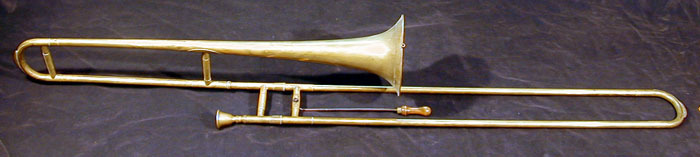
E flat bass trombone marked "G.W. Voight, Jr. Markneukirchen Sachsen". Made of brass with nickel silver mounts, 54 1⁄4” long, 10” bell. The handle attached to the slide of this trombone, allowed the player to extend the slide farther than an arm could reach to create low notes. Dates made is unknown. From the collection of the Moravian Historical Society, Nazareth, Pennsylvania.
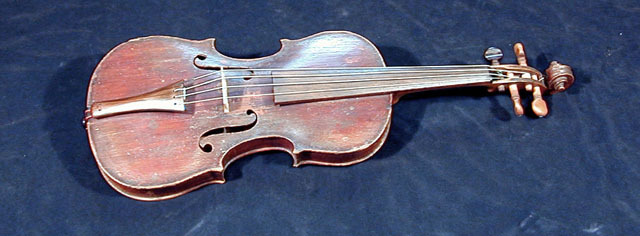
This is the earliest known extant American violin. It was made by the versatile, American-born, John Antes (1740-1811) in Bethlehem, Pennsylvania. It shows characteristics of Saxon violins of which he was familiar. With no master instrument maker to train him, Antes copied what he saw and improved his trade through ingenuity and necessity. In addition to being America’s first luthier, Antes was also a composer and a Moravian missionary.
Raised in Moravian schools, Antes showed early promise as a musician, and also as an instrument maker. The only known Antes instruments which survive, however, are this violin made in 1759, and a viola made in 1764 (now in the collection of the Lititz Moravian Archives). A cello which he made in 1764 is thought to be in the Moravian Church collection in Gnadenhutten, Ohio. Antes was contracted to make a set of instruments for Lititz, Pennsylvania. The only known Antes instruments which survive, however, are this violin made in 1759, and a viola made in 1764 (now in the collection of the Lititz Moravian Archives). A cello which he made in 1764 is thought to be in the Moravian Church collection in Gnadenhutten, Ohio.
This piece, made of maple, walnut, and ebony
was restored by C.F Martin & Co., 1954, and by the Smithsonian Institute, 1967.
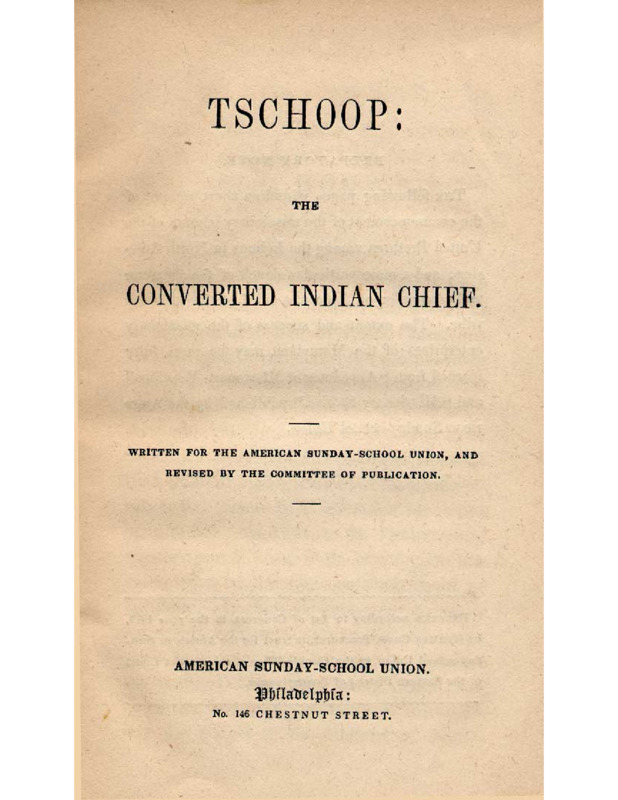
Tschoop: The Converted Indian Chief is a book written in 1842 by the American Sunday School Union. The book tells the story of Tschoop, a Native American chief who converted to Christianity in the mid-18th century. The book follows Tschoop's life, from his early days as a hunter and warrior to his conversion to Christianity and his eventual role as a missionary to his own people. The book also explores the challenges and struggles that Tschoop faced as a Christian Native American, including discrimination and mistrust from both his own people and the white settlers who were colonizing their land.
Digitized from text held by the Reeves Library, Moravian University & Theological Seminary, 2000.
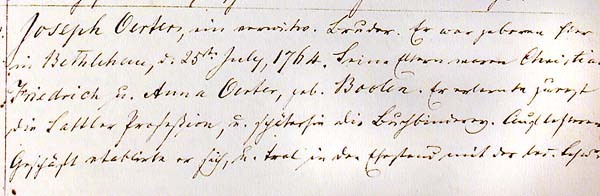
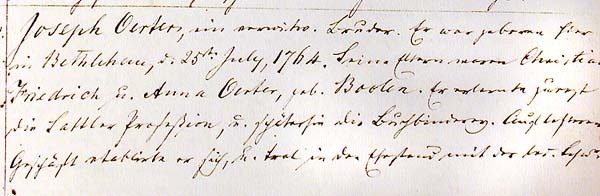
This church register entry records the 1841 death of Joseph Oerter of Bethlehem, Pennsylvania, and includes a brief biography of his life. Born in 1764 to Christian Friedrich and Anna Oerter, he trained first as a saddler and later became a bookbinder. In 1793 he married Maria Justine Hasse, and together they had four children, three of whom survived him, including a son who was a missionary in the West Indies. Widowed in 1818, Oerter suffered from painful rheumatic illness for many years but was remembered for his patience and faith. After developing a fever in his final days, he died peacefully at age 76, surrounded by the blessings of the Moravian congregation.
This memorial biography recounts the life of Eleonora Elisabeth von Seidliz, a Moravian unmarried sister and longtime leader of the Single Sisters’ Choir. Born in Silesia in 1724, she experienced hardship after her father’s death and later joined the Moravian congregation at Gnadenfrey with her sister in 1743. After embracing the Moravian faith, she served in numerous leadership roles in Europe and England before traveling to Pennsylvania in 1763 to become warden of the Single Sisters’ Choir in Bethlehem. She faithfully carried out her duties for nearly two decades despite declining health, suffering from severe chest illness and coughing of blood. She died peacefully at age 65 after a lifetime devoted to religious service and leadership within the Moravian community.
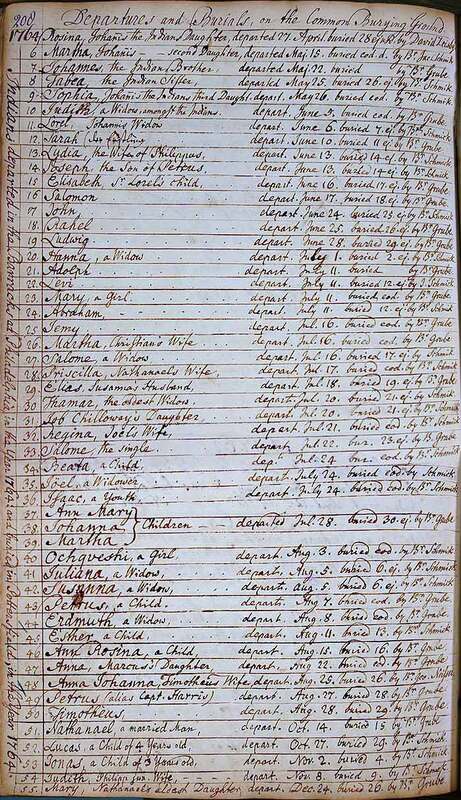
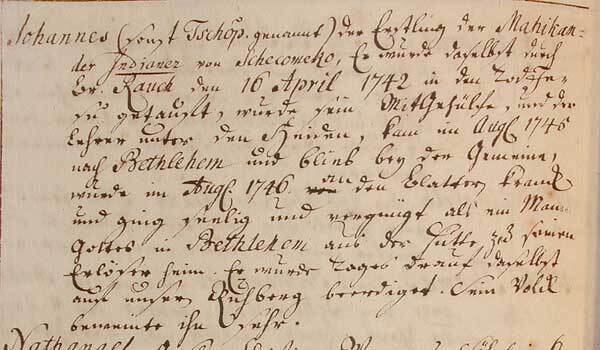
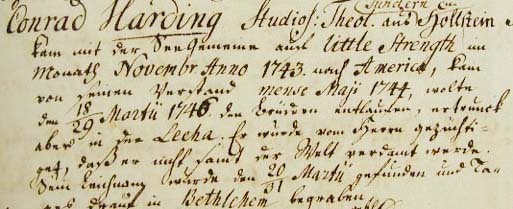
This is the death notification in the church register for Tschoop, aka Johannes, which occurred in Bethlehem, Pennsylvania, in 1746. The entry contains a short biography.
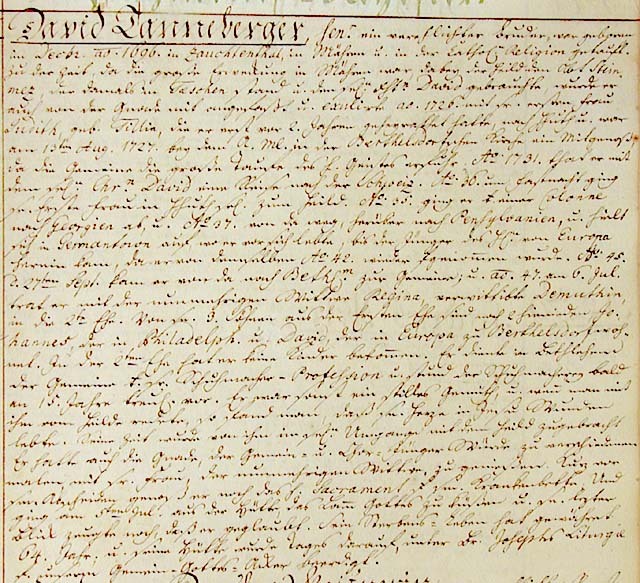
This is the death notification in the church register for David Tanneberger Sr., which occurred in Bethlehem, Pennsylvania, in 1760. The entry contains a biography.
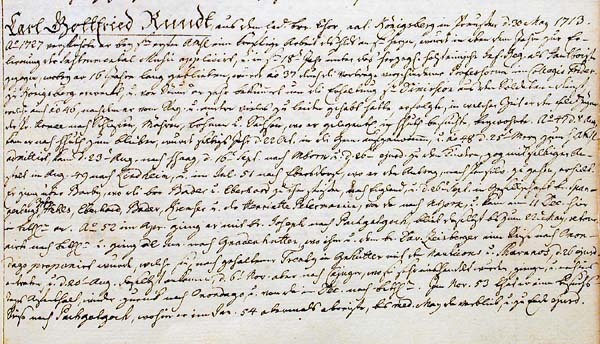
This the death notification in the church register for Carl Gottfried Rundt, which occurred in Bethlehem, Pennsylvania, in 1764. The entry in the register includes a biography.
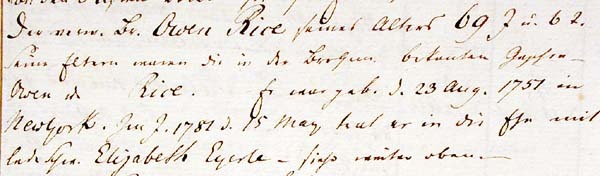
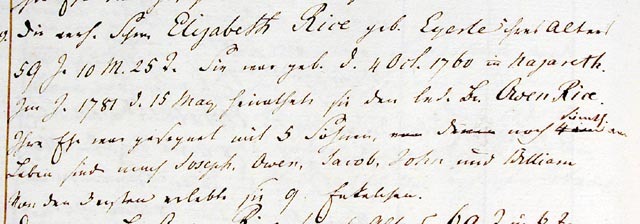
This is the death notification in the church register for Elizabeth Rice, which occurred in Bethlehem, Pennsylvania, in 1820. The entry includes details about her genealogy.
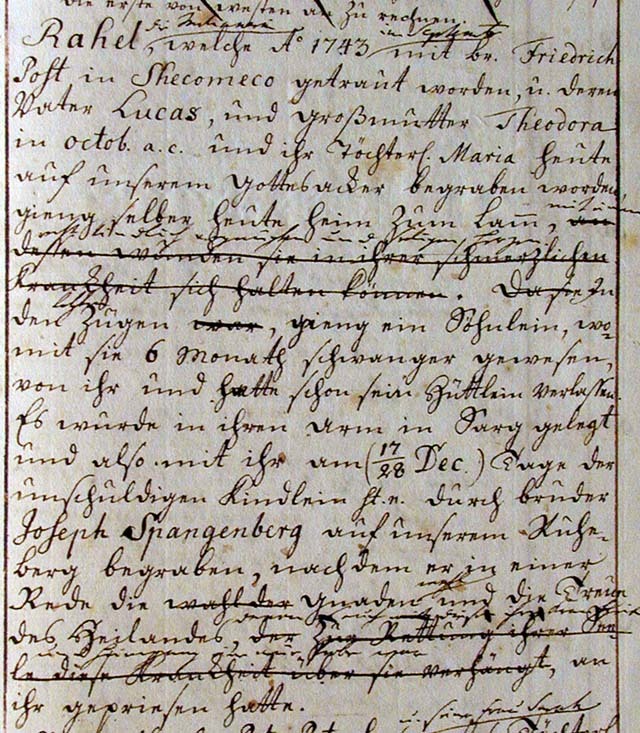
This is the death notification in the church register for Rachel Post, which occurred in Bethlehem, Pennsylvania, in 1747. The entry contains a biography.
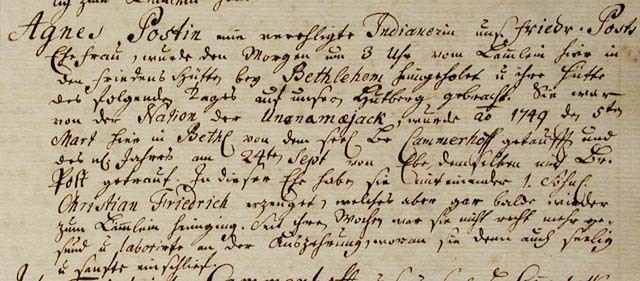
This is the death notification in the church register of Agnes Post (Postin), which occurred in Bethlehem, Pennsylvania, in 1751. The entry includes a very short biography.
This is the death notification in the church register for John (Johann) Matthew (Matthacus) Otto, which occurred in Bethlehem, Pennsylvania, in 1786. The entry contains a biography.
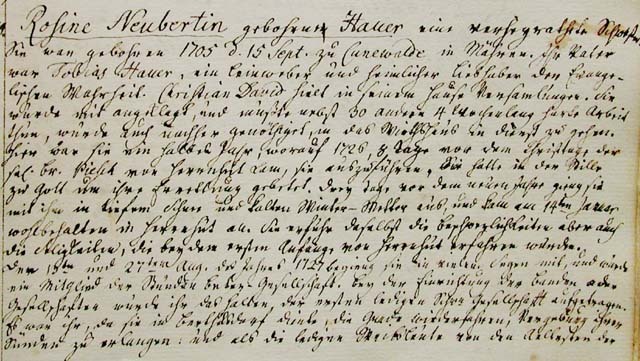
This is the death notification in the church register for Rosina Neubert (Neubertin), which occurred in Bethlehem, Pennsylvania, in 1785. The entry also contains a biography.
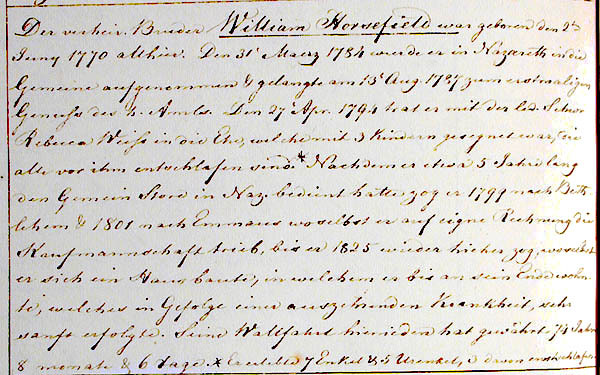
This is the death notification in the church register for William Horsfield, which occurred in Bethlehem, Pennsylvania, in 1845. The entry also includes a short biography.
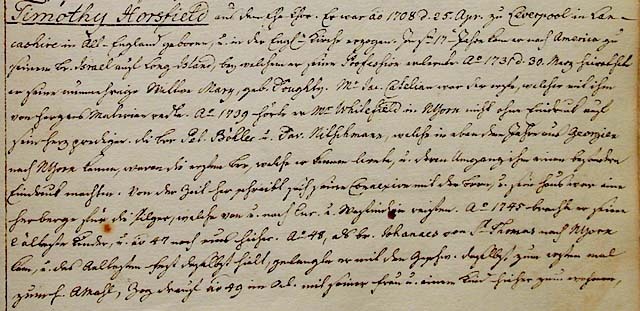
This is the death notification in the church register for Timothy Horsfield, which occurred in Bethlehem, Pennsylvania, in 1773. The entry also contains a biography.
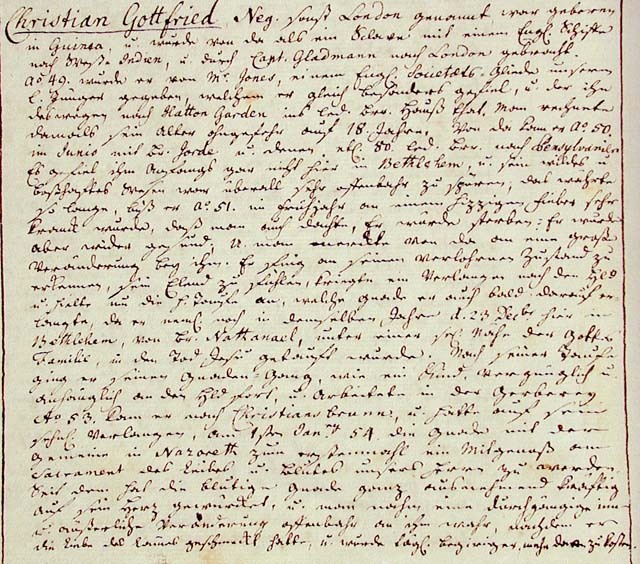
This is the death notification in the church register for Christian Gottfried, which occurred in Bethlehem, Pennsylvania, n 1756. It also contains a biography.
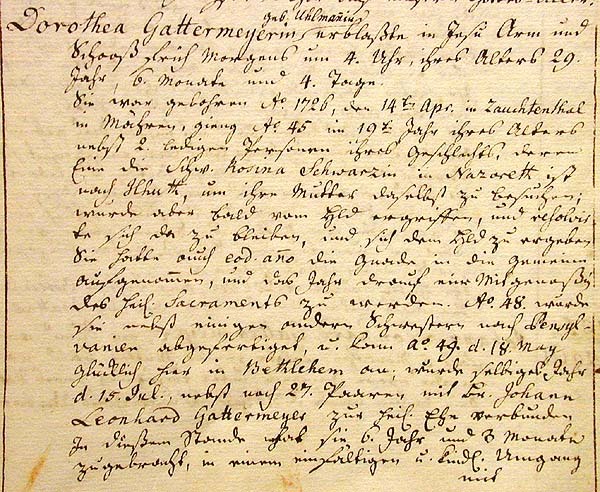
This is the notification in the church register of the death of Dorothy Gattermeyer, which occurred in Bethlehem, Pennsylvania, in 1755. It includes a biography. This text is a classic Moravian memoir or death narrative (“Lebenslauf”), written to commemorate her faith, service, suffering, and spiritually joyful death. It portrays her as devoted, humble, industrious, and deeply centered on Moravian devotional life until her death at age 29 in 1755.