This document recounts the life of Daniel Kliest, who was born on January 15, 1716, near Frankfurt an der Oder. It describes his childhood, religious upbringing, work and travels, his spiritual development, and his eventual connection with the Moravian (Herrnhut) Church. The narrative emphasizes his sincere Christian faith, periods of personal struggle and religious awakening, his relationships with fellow believers, and his efforts to live a devout life. It records various places where he lived and worked, significant events in his religious journey, details about his family and marriage, and finally his later years and death. Like many Moravian life sketches, the focus is less on worldly accomplishments and more on his character, faith, conversion experiences, and relationship with God.
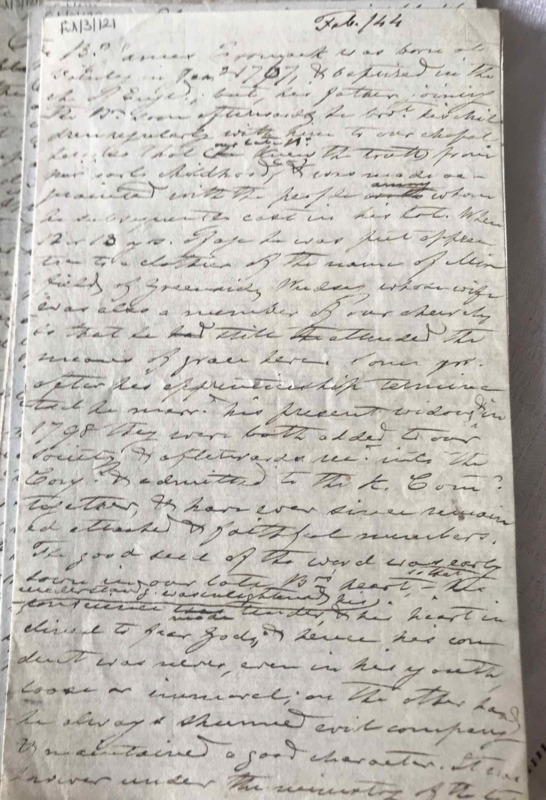
Biographical memoir of Brother James Cromark, an active member of the Moravian congregation in Pudsey, England. Raised from infancy in the Moravian chapel after his father joined the Brethren, Cromark was apprenticed to a local clothier named Mirfield around age 12 or 13. The text records his marriage, his joint entry into the Moravian Society and Holy Communion alongside his wife in 1798, and their deep spiritual awakening under the ministry of Brother John Hartley. It describes his quiet, retiring character and his multi-month decline involving jaundice and dropsical leg swelling. The record concludes with his final pastoral counseling and peaceful death at age 77, noting his extensive lineage of ten children and twenty-five grandchildren.
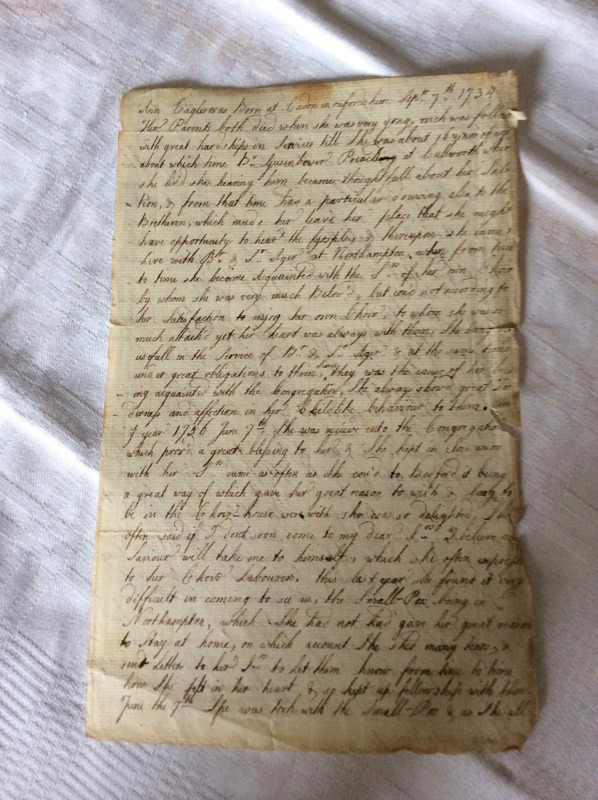
Biographical memoir of Single Sister Ann Eagles. Orphaned in early childhood, she suffered severe operational hardships in domestic service throughout Oxfordshire until an open-air sermon by Brother Gussenbauer at Culworth prompted her spiritual awakening at age sixteen. The text chronicles her move to Northampton to serve Brother and Sister Ager, her introduction to the Moravian community, and her formal reception into the Bedford congregation in 1756. It details her intense longing to reside within the definitive Single Sisters' Choir House, her isolation in Northampton during a regional smallpox epidemic, and her rapid death from the disease under the bedside care and vocal hymnody of Sister Lorel in June.
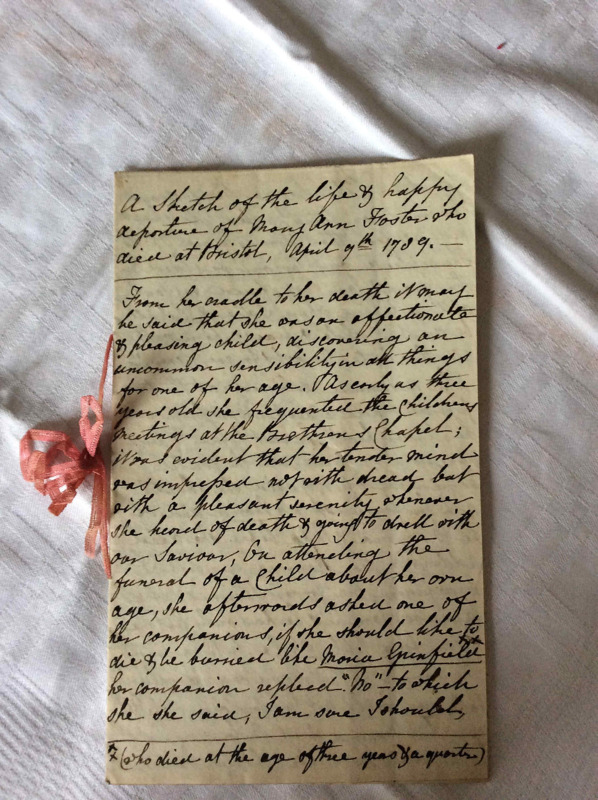
Biographical narrative and spiritual sketch of Mary Ann Foster, a child who frequented the Moravian Children's Meetings in Bristol and died at four and a half years old. The text captures a highly detailed example of Moravian childhood piety and the early internalizing of liturgy surrounding salvation, Christ's wounds, and a serene view of mortality. It documents her reactions to the funeral of her contemporary Maria Grinfield, her spiritual warning to a family servant, her premonition of her own death over an intended move to a school in London, and her explicit deathbed requests regarding a white Moravian choir-style burial processional. The account concludes with her death from a putrid sore throat and fever in April 1789.
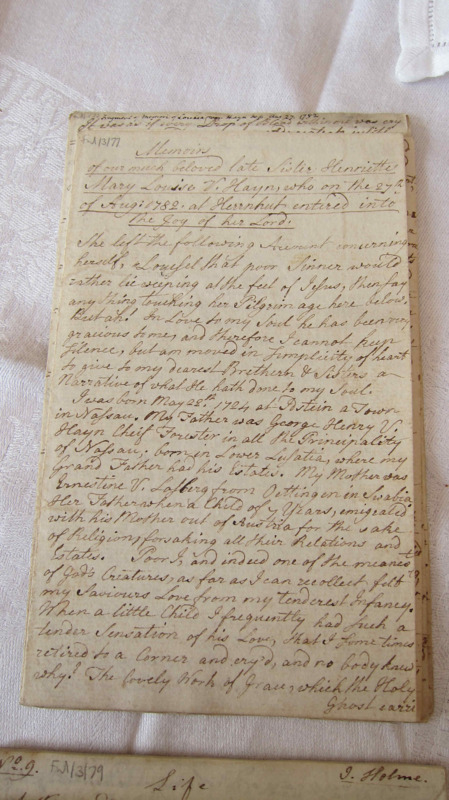
Autobiographical and communal memoir of Henriette Mary Louise von Hayn (familiarly known as Louisel), a prominent Moravian deaconess, educator, and celebrated hymnwriter. Born into a noble family in Nassau, she describes her vivid childhood spiritual experiences, her dramatic escape to Marienborn and Herrnhag in 1744 against her parents' initial wishes, and her protective spiritual adoption by Count von Zinzendorf. The text highlights her 16-year administration over the regional Moravian Girls' Institutional Oeconomy (including its stay at Castle Hennersdorf) and her subsequent 16-year tenure as the head Choir Helper for the Single Sisters at Herrnhut. The closing narrative details her synodal participation, her creative hymnody, her long-term battle with a chronic lung cough, and her death from dropsical complications in August 1782.
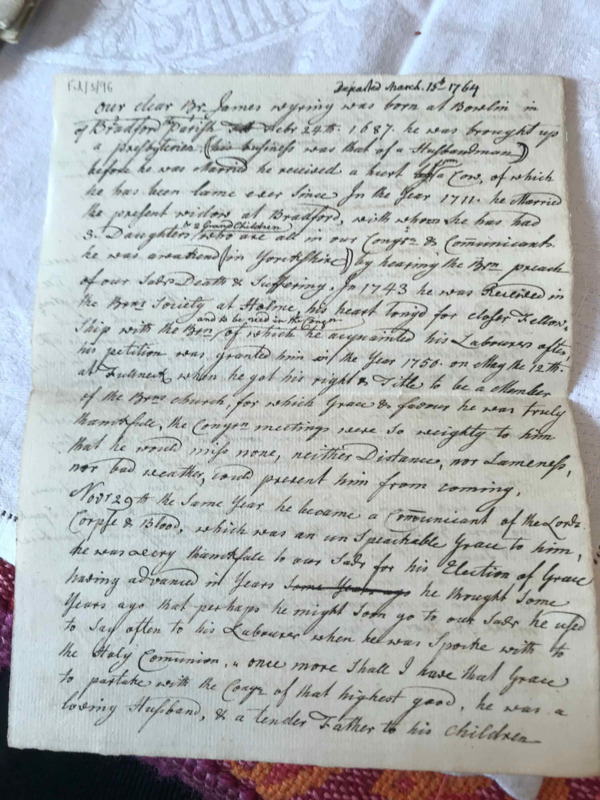
Biographical memoir of Brother James Wyring, an agricultural laborer (husbandman) originally raised in the Presbyterian Church. The text notes a lifelong physical lameness caused by an early injury from a cow. It details his marriage in Bradford in 1711, his subsequent spiritual awakening in Yorkshire upon hearing Moravian preaching, and his formal reception into the Moravian Society at Holme in 1743. The account highlights his immense dedication to traveling to congregational meetings at Fulneck despite his physical infirmity and advanced age. The record concludes with a description of his final illness (ague) and death under the spiritual care of Brother Hauptmann in March 1764.
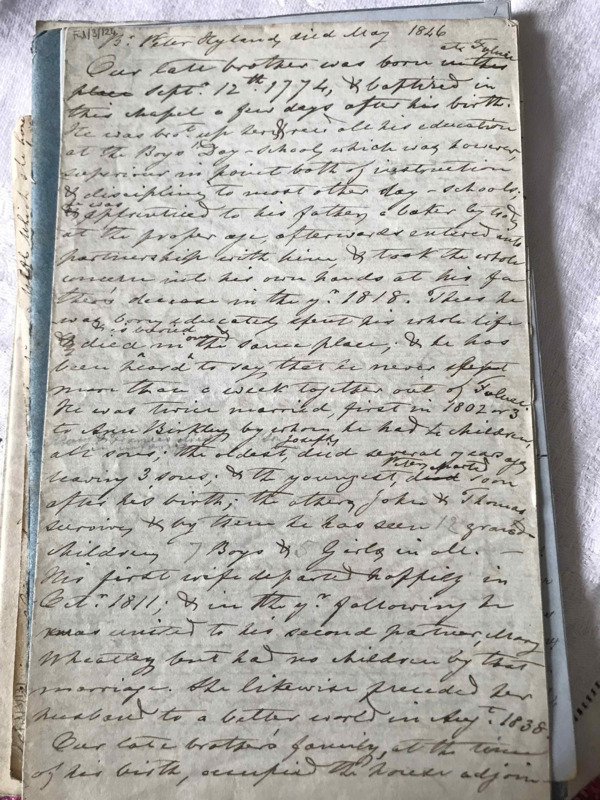
Biographical memoir of Peter Hyland, a baker who spent his entire life, education, and career within the Moravian settlement of Fulneck, England. The text, authored by a lifelong neighbor and acquaintance, outlines Hyland's education at the local Boys' Day School, his professional transition into his father's bakery business, and his marriages to Ann Birkby and Mary Wheatley. The account highlights his extensive structural contributions to the Fulneck community, which included serving on the congregation's committee and council, alongside a remarkable 52-year tenure as a voluntary chapel servant. It concludes with observations on his personal character, his spiritual principles, and his peaceful death from natural decline in May 1846.
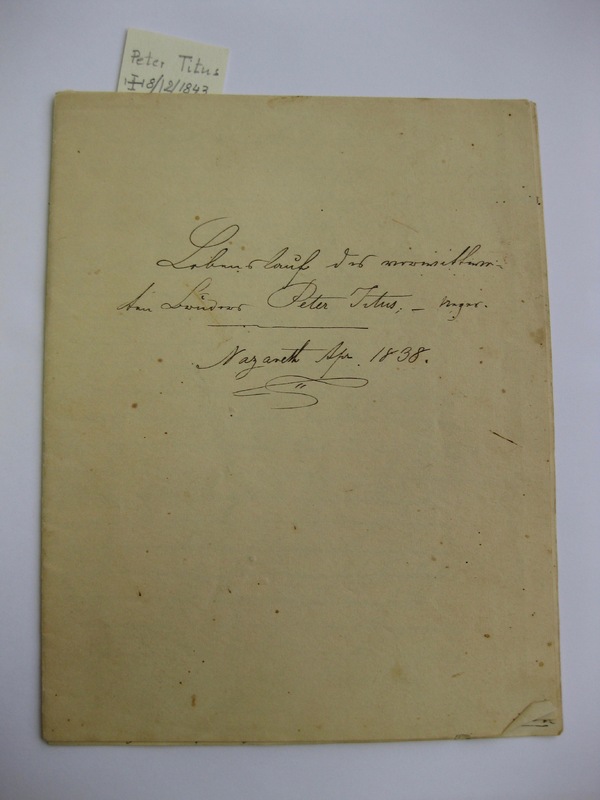
Autobiographical memoir of Peter Titus, an African American member of the Moravian Church. The text was dictated in 1838 and supplemented by an account of his final years and death in the Nazareth almshouse in 1843. Titus describes his childhood in New York in the home of Christian Fröhlich, his vocational training as a tanner, his various roles as postmaster and farmer, and his service as a preacher for the Black community on Staten Island.
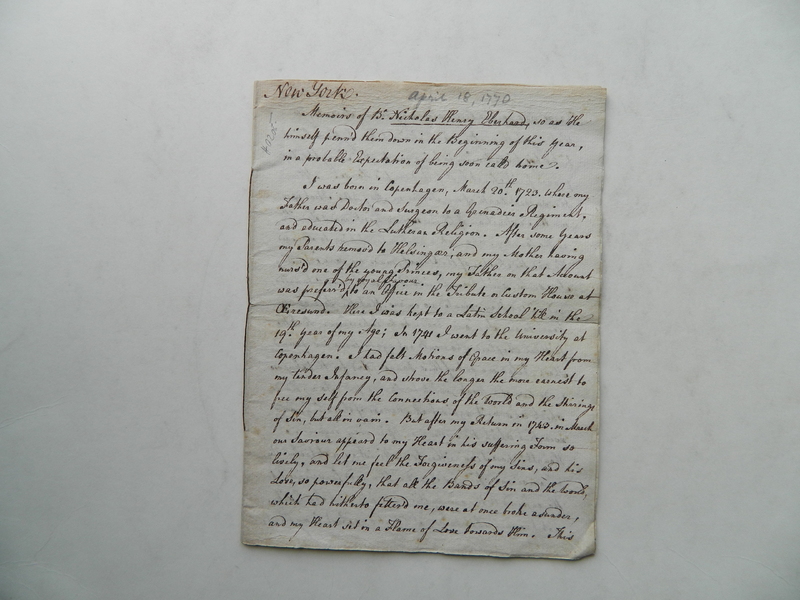
Autobiographical memoir of Nicholas Henry Eberhard, including a concluding postscript by his widow, Sara Eberhard (née van Vleck). Born in Copenhagen, Eberhard recounts his education, his conversion to the Moravian faith, and his subsequent travels to Herrnhaag and Pennsylvania. The narrative details his extensive service as a bookkeeper in Bethlehem, steward of the Single Brethren's Choir, missionary to the Indian flock at Scatticoke, and his final ministerial assignments at Oldmans Creek and Manakesy, Maryland.
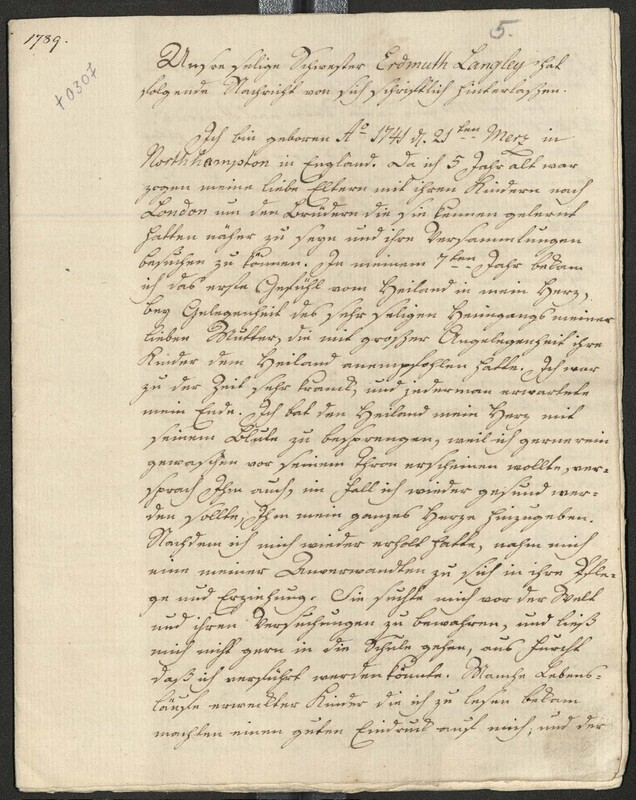
In this autobiographical memoir, Erdmuth Langley recounts her journey from Northampton, England, to Bethlehem, Pennsylvania, including her passage on the ship Irene in 1754. She describes her upbringing in London, her training as a tailor in Philadelphia, and her life in the Bethlehem Moravian community as a teacher and nurse. The account details her deep spiritual commitment and her service to the congregation until her death from influenza at the age of 48.
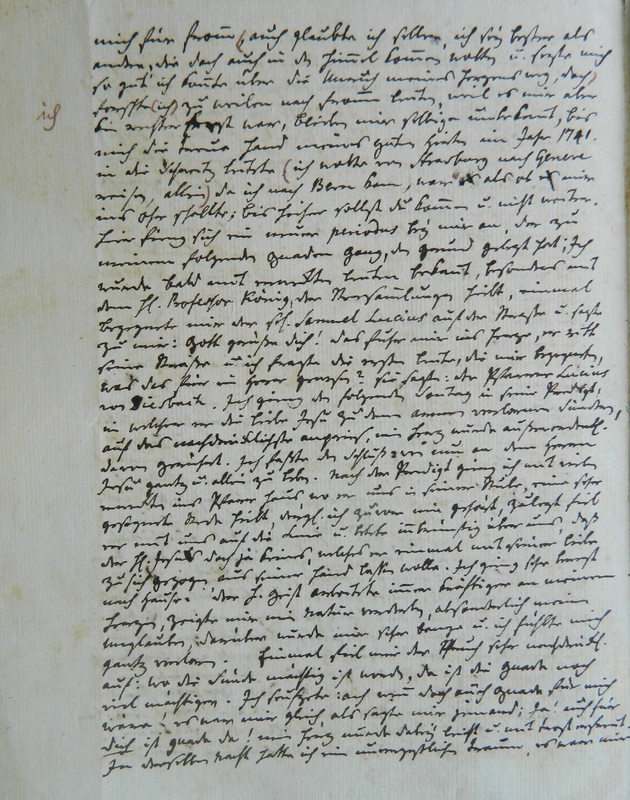
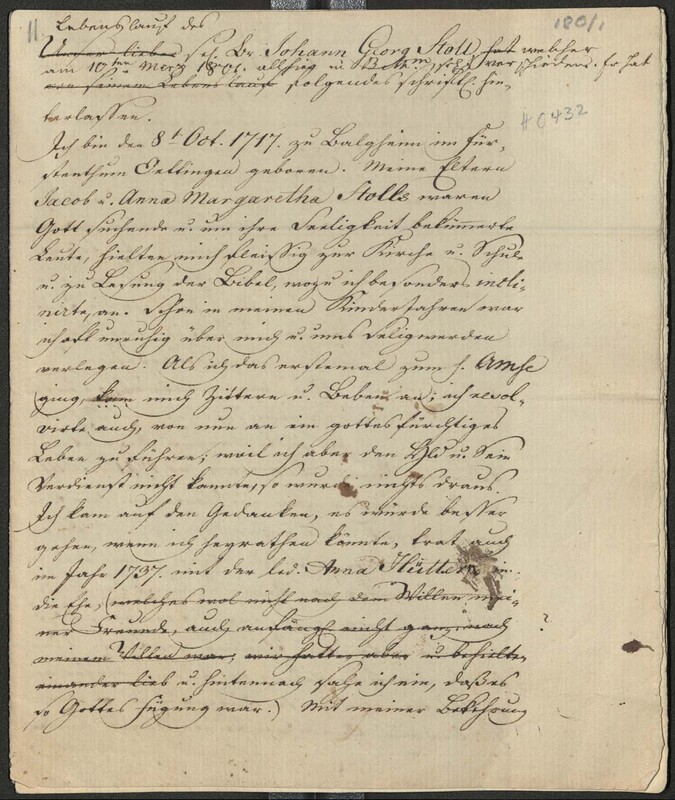
Autobiographical memoir of Johann Georg Stoll. The text describes his origins in Balkheim in the Principality of Oettingen and his spiritual awakening in 1741 under the preaching of Pastor Dödelein. It documents his journey to the Moravian congregations in Herrnhaag and Marienborn, his voyage to Pennsylvania in 1749 on the ship "Irene," and his various services in the Moravian households of Gnadental and Friedensthal. A significant focus is placed on his marriage to Anna Hütter and their shared service within the community.
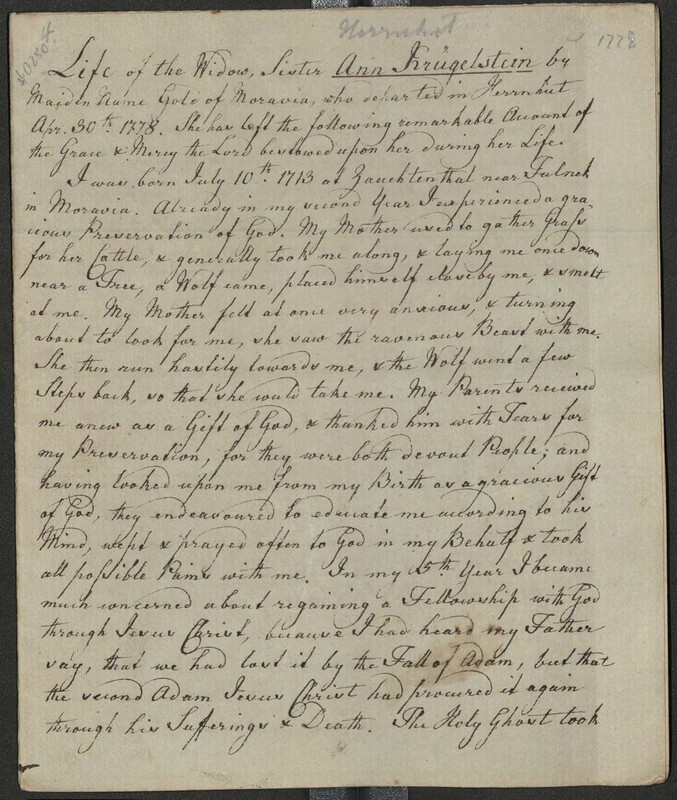
Written in English, this document is an autobiographical spiritual memoir of the widow Sister Ann Krügelstein (née Anne Gole of Moravia), who died in Herrnhut on April 30, 1788. Written primarily in the first person, the narrative recounts her birth in 1713 near Fulneck in Moravia, her childhood, her parents’ religious devotion, and formative spiritual experiences. The memoir emphasizes themes common to Moravian religious literature, including divine providence, grace, salvation through Jesus Christ, and lifelong Christian faith.
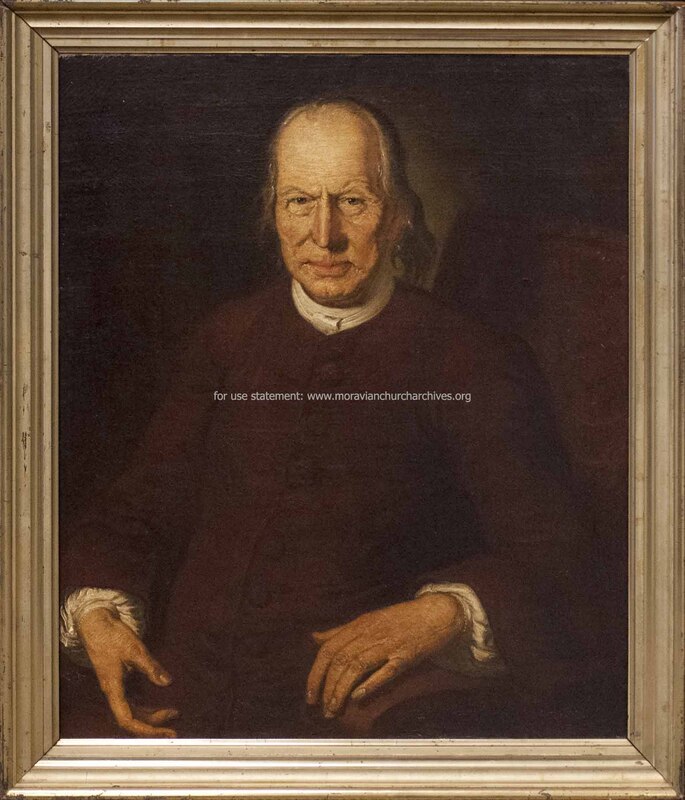
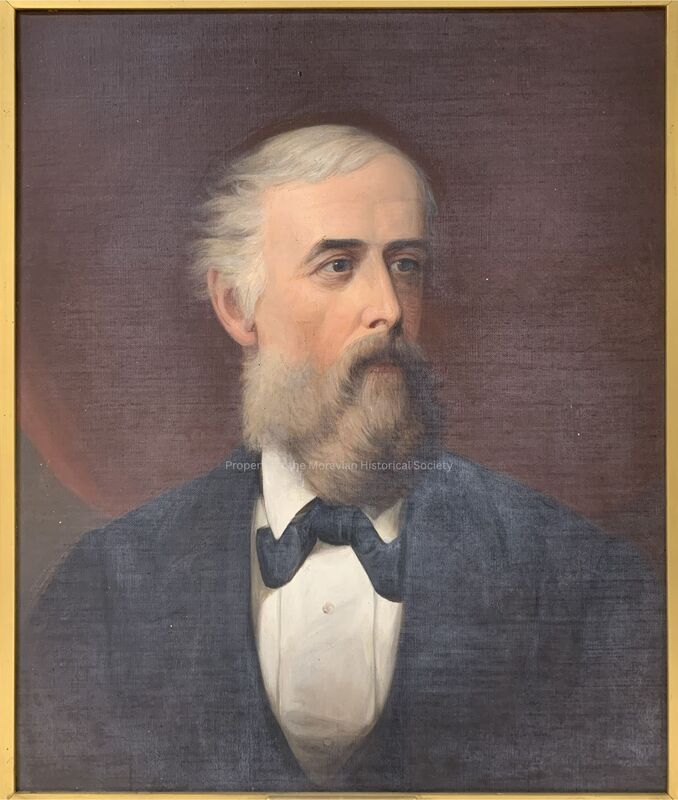
Portrait of an elderly Moravian man, sitting on a chair, showing both hands, one button is missing. gold frame.
David Nitschmann (1676-1758), 'Altvater', born in Zauchtental, Moravia, married Anna Schneider (1702), imprisoned (1724?), escaped and went to Herrnhut (1725), missionary in St. Croix (1733-37), went to Pennsylvania (1740), one of the founders of Bethlehem, felled the first tree for the new community, became proprietor of the Moravian property (1751). He died in Bethlehem. Anna Nitschmann ('Caritas') was his daughter.
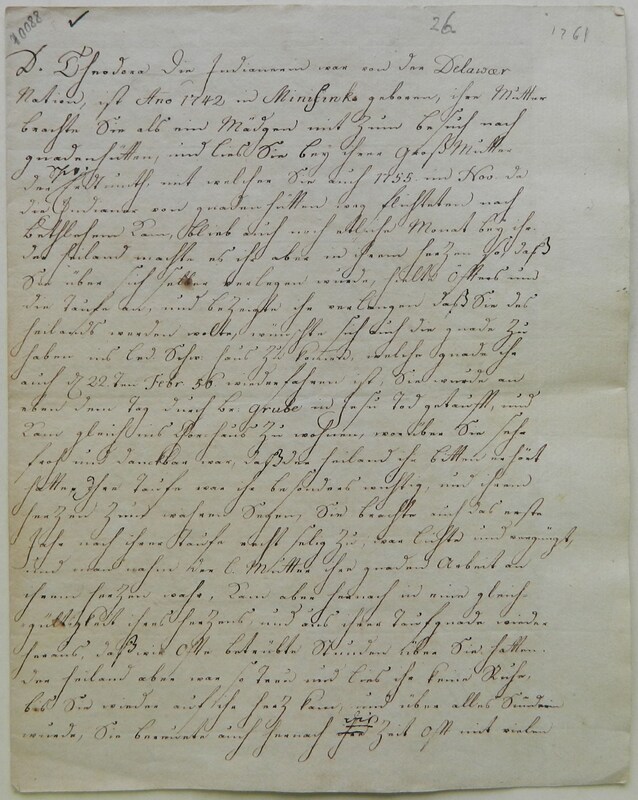
Written in Kurrent in the German language, this document is a biographical memoir of Theodora (1742–1761), a woman associated with the Delaware (Lenape) Nation who was born in 1742 in Minisink. The narrative recounts her family background, childhood, religious instruction, and experiences within the Moravian community. The account reflects themes of hardship, Christian conversion, spiritual development, and participation in Moravian religious life, while also providing insight into Indigenous experiences and Moravian missionary activity in colonial North America.
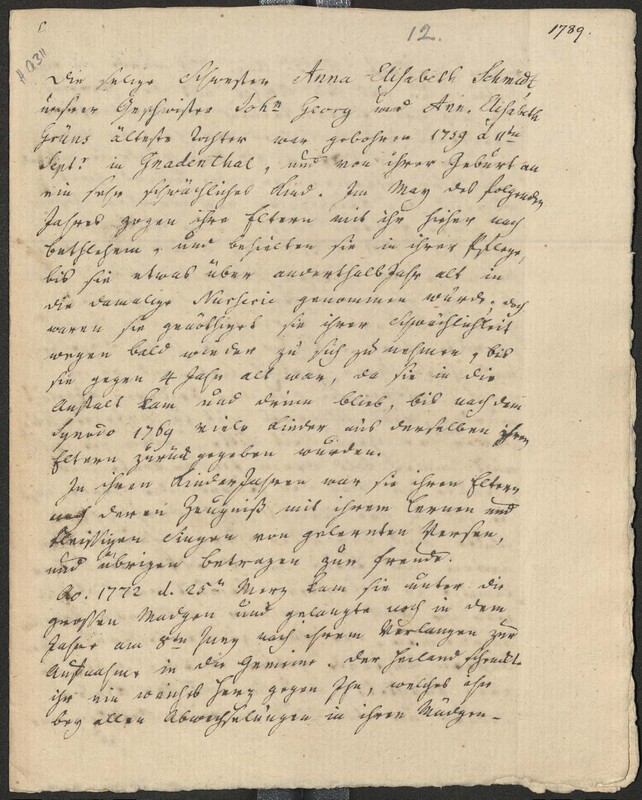
Written in Kurrent in the German language, this document is a biographical memoir of Anna Elisabeth Schmidt, born September 14, 1739, in Gnadenthal. The narrative recounts her family background, childhood, religious upbringing, periods of illness and hardship, and involvement in the Moravian community. Like many Moravian memorial biographies, the account emphasizes themes of faith, suffering, spiritual growth, and religious devotion.
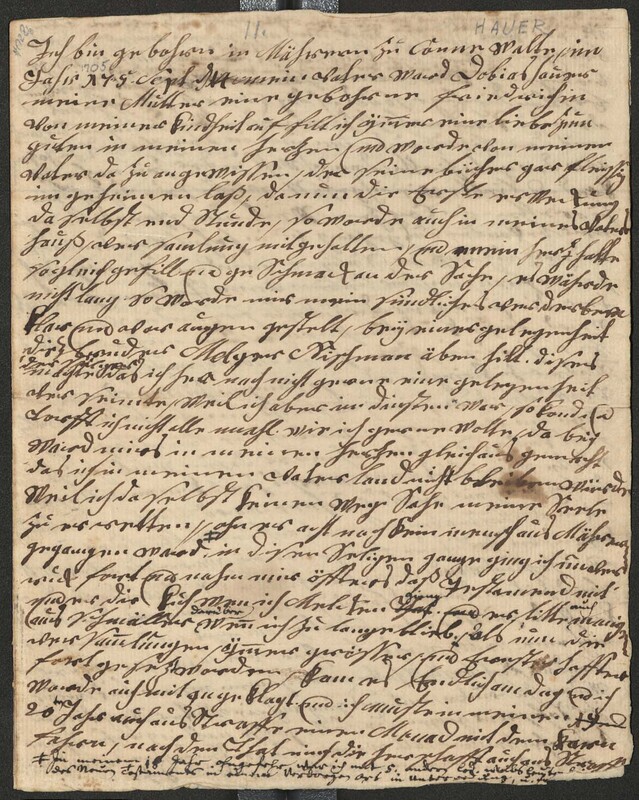
Written in Kurrent in the German language, this document is an autobiographical memoir or spiritual life narrative of Rosina Neubert born in Moravia. The memoir recounts her family background, childhood, labor and hardships, religious upbringing, and spiritual development. The narrative reflects themes common to Moravian memoir literature, including suffering, religious instruction, prayer, repentance, and the search for salvation and spiritual peace.
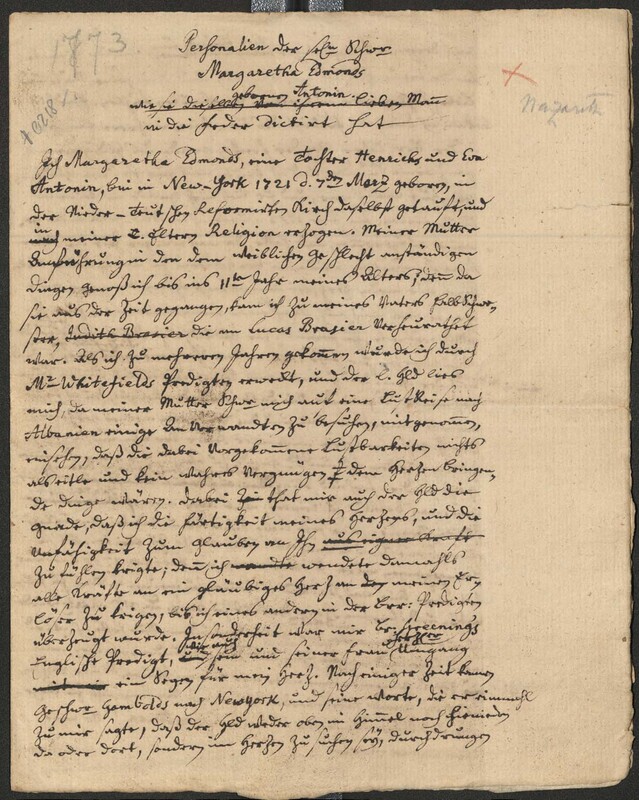
Written in Kurrent in the German language, this document is an autobiographical memoir or spiritual life narrative (“Lebenslauf”) of Margaretha Edmonds (1721–1773). The text states that she was born in New York on March 7, 1721, to Henrich and Eva Antonia Edmonds and that she was raised in the Dutch Reformed Church. It reflects on her religious upbringing, her mother’s influence, and her developing spiritual experiences and faith. Like many Moravian spiritual memoirs, the narrative combines personal recollection with religious reflection and was likely preserved by the Moravian community after her death.
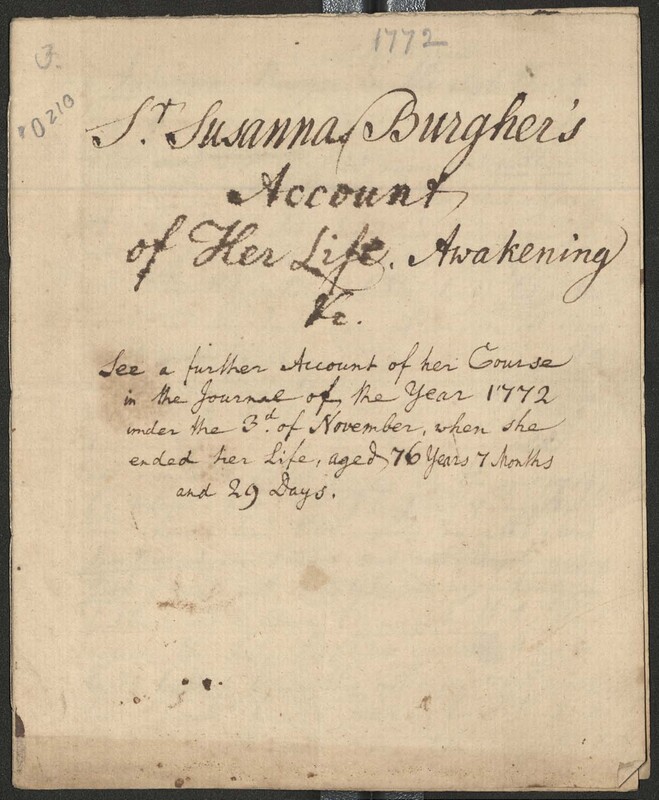
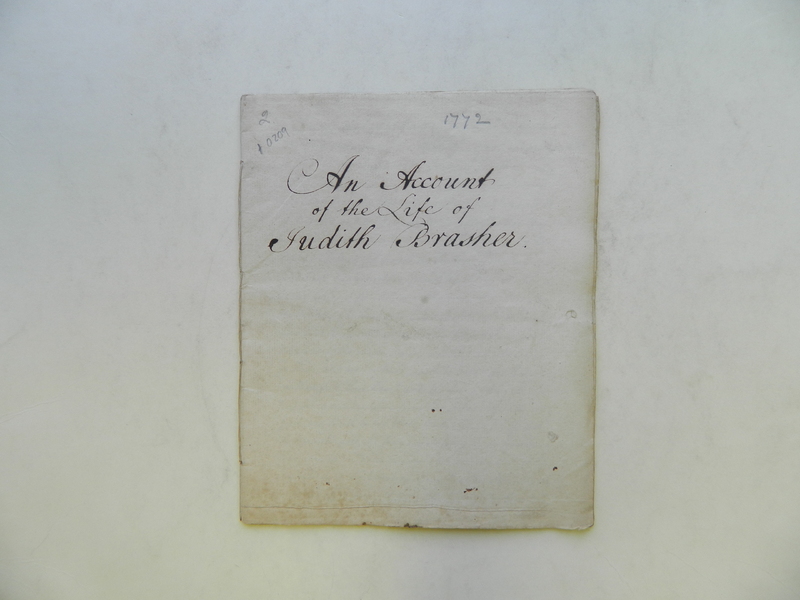
Autobiographical narrative of Susanna Burger (1696–1772), describing her early life in New York, family relationships, marriage, and religious development.
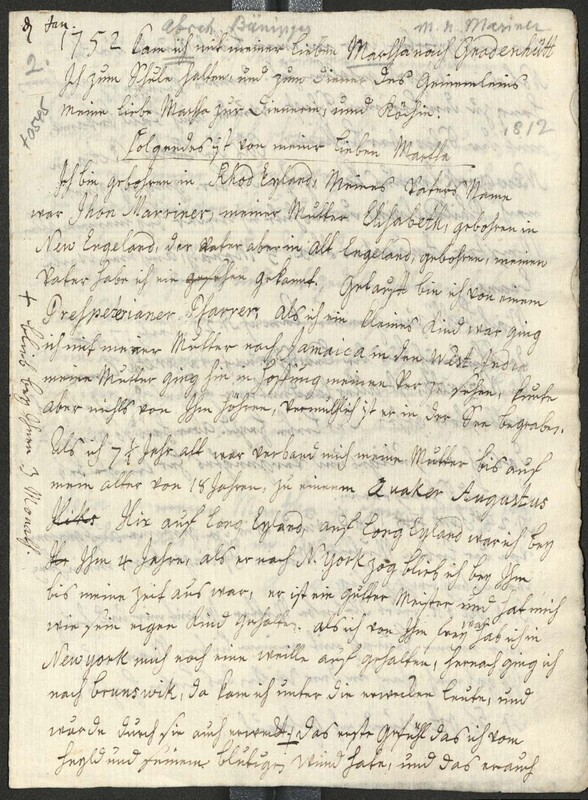
Written in Kurrent in the German language, this document is an autobiographical memoir or spiritual life narrative dating from approximately 1752. The narrative is written in the first person and recounts the author’s early life and family history. The writer states that they were born in Rhode Island to John Marriner and Elizabeth Marriner, with the father described as an English sea captain born in England and the mother born in New England. The memoir explains that the father traveled to America and the West Indies in search of opportunity but later died of fever. The author recalls being separated from their mother for many years during childhood and later references connections to Quaker communities, Long Island, New York, and Brunswick. The document reflects themes of migration, family hardship, and religious and personal experience in colonial America.
Written in English, this document is an autobiographical religious memoir or spiritual life narrative recounting the early life and family history of the author and the author’s father, Jacob, who was born in 1700 and baptized in the Reformed Church. The narrative describes family hardships, the loss of parents during childhood, religious instruction, and the development of Christian faith. Like many Moravian spiritual memoirs, the text emphasizes themes of suffering, conversion, prayer, and salvation through Jesus Christ.
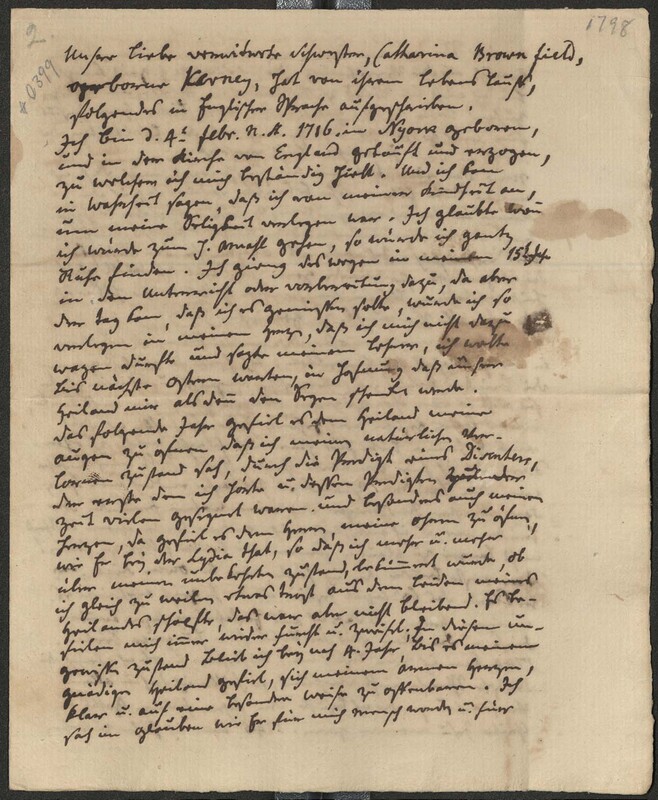
Written in Kurrent in the German language, this document is an autobiographical memoir or spiritual life narrative of Catharina Brownfield, née Kerney, a widowed Moravian woman born on February 24, 1716, in Nyon. Written in the first person, the memoir recounts her early life, family background, religious upbringing, and personal hardships. The narrative reflects on periods of illness, emotional suffering, and spiritual struggle, while also describing her developing faith and religious experiences. Like many Moravian spiritual memoirs, the document emphasizes themes of personal reflection, suffering, prayer, and the search for salvation.
Reinke, Samuel (1818)
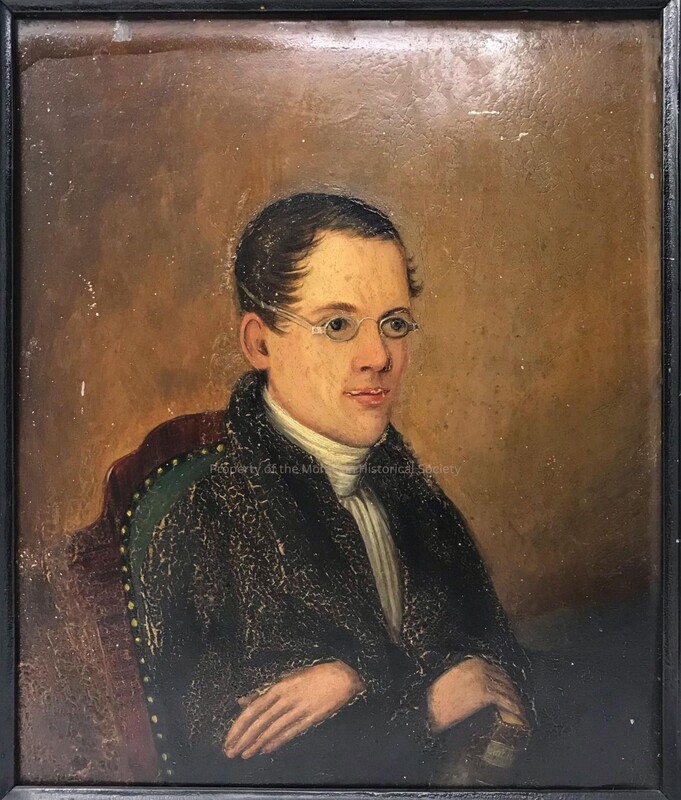
Portrait of a young man from the side, black jacket, white scarve, in oval
Samuel Reinke (1791‐1875), born in Lititz, Brüderpfleger and ‐Vorsteher in Lititz (1816‐1819), married with Susanna Theodora Eyerle (1819), ordained a deacon (1819) and served in Lancaster, Philadelphia, Newport, Lititz. In 1826 Susanna Re‐inke died in Lititz and Samuel remarried with Charlotte Sophia Hüffel (1827). They served in Graceham, Lancaster, Nazareth, Bethlehem, New York, and in Lititz. He was a member of the PHC (1839‐1847) and was ordained a bishop (1858). Samuel Reinke suffered from a weak health. He died in Bethlehem.
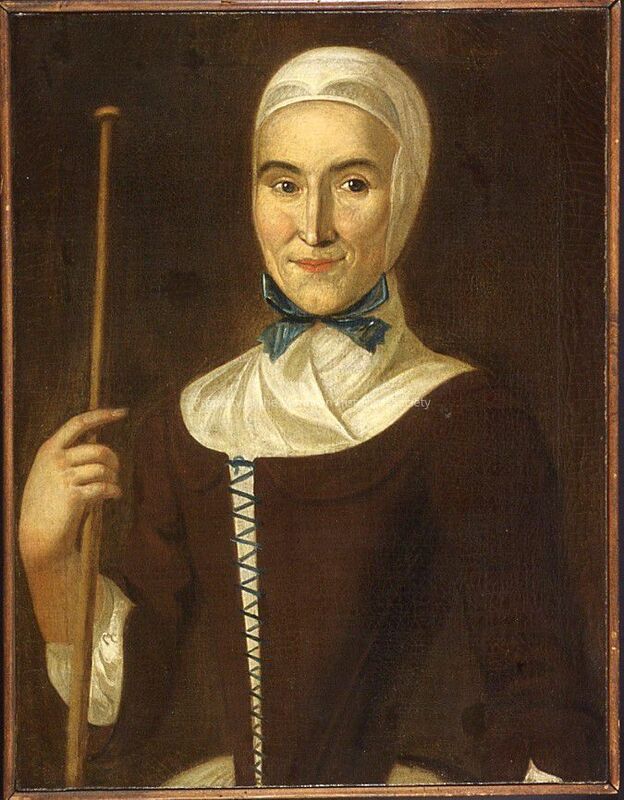
Portrait of Johanna Ingerheidt Schmick (1721-1795)
Schmick was a missionary to the Delaware and Mahican Indians first in Gnadenhütten, Pennsylvania in 1751 and later in Gnadenhütten, Ohio in 1773. Gnadenhütten translates to "village of grace." In 1782, U.S. militiamen from Pennsylvania attacked the Ohio settlement and massacred 96 men, women, and children who were pacifist Moravian Indians (primarily Lenape and Mohican).
Born Johanna Ingerheidt in Larvik, Norway, she arrived in Pennsylvania in 1752 on
the Moravian transport the Irene. She married John Jacob Schmick in 1752 in Bethlehem.
Restoration funded by Mr. and Mrs. Walter L. Peters