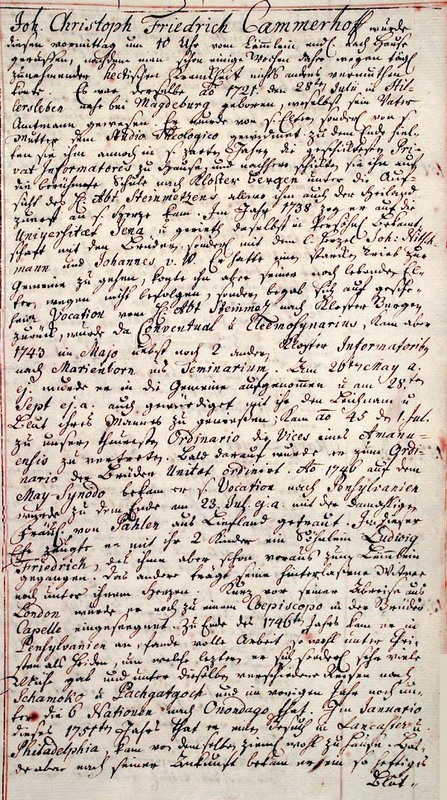
This Moravian memoir recounts the life of Johann Christoph Friedrich Cammerhoff, a Moravian minister and missionary born in Germany in 1721. Originally educated for Lutheran theology, he was drawn to the Moravian Church while at university and formally joined the congregation in 1743. After serving in church leadership and marrying in 1746, he traveled to Pennsylvania where he devoted himself to missionary work among both European settlers and Native American communities, including the Six Nations. Following a sudden and severe illness, he died in Bethlehem in 1751 at only 29 years old and was buried on the Hutberg beside fellow Moravian believers and his young son.
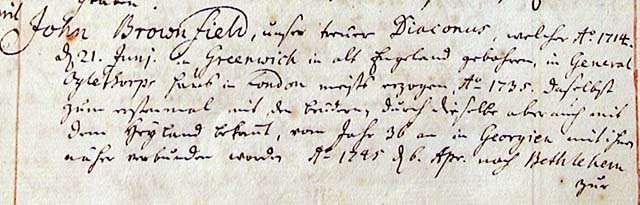
This Moravian memoir commemorates John Brownfield, an English-born deacon who was born in Greenwich in 1714 and became connected with the Moravians in the 1730s through General Oglethorpe’s circle and the Moravian community in Georgia. He formally joined the Moravian congregation in Bethlehem in 1745, married Catharina Kearny in 1747, and later became a Moravian deacon. Remembered for his deep devotion to Jesus and faithful service to the congregation, he died in 1752 from a severe fever at the age of 37 and was buried in Bethlehem with a large gathering of Moravians and local neighbors in attendance.
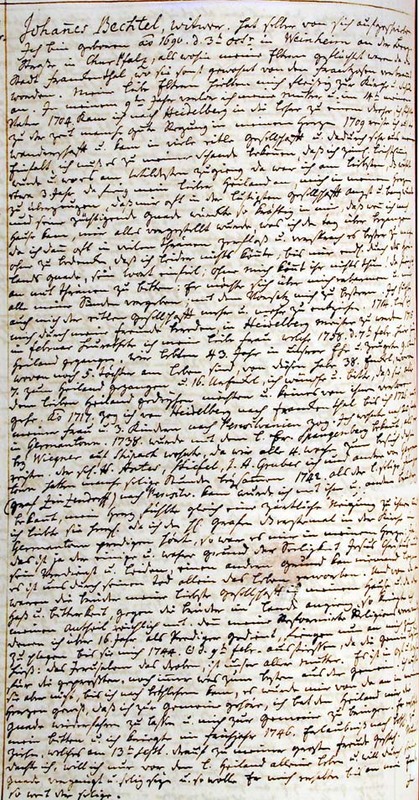
This memoir recounts the life of Johannes Bechtel, a German-born craftsman and religious leader who immigrated to Pennsylvania in 1726 and later became devoted to the Moravian Church after encountering Count Zinzendorf and the Brethren in the 1740s. Originally associated with the Reformed Church, he eventually joined the Moravian congregation in Bethlehem, where he served faithfully for many years through leadership, manual work, and devoted participation in worship. Remembered for his humility, love of the Savior, and peaceful faith, he spent his later years in quiet fellowship with the Moravian community before dying in his 87th year.
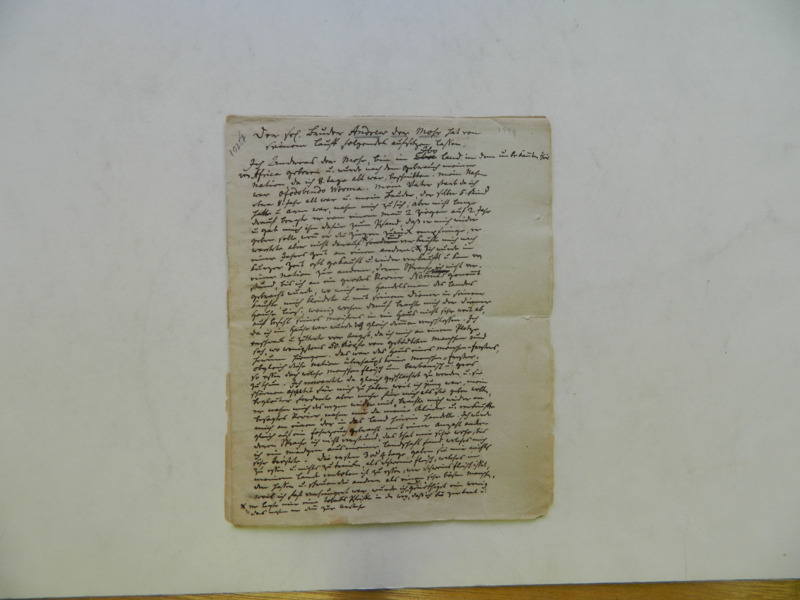
This Moravian memoir recounts the life of Andrew the Moor, originally named Ofodobendo Wooma, who was born in Africa and sold into slavery before arriving in New York in 1741. After meeting Moravian Brethren while enslaved in New York, he learned about Christianity, taught himself to read, and developed a deep faith in the Savior. He moved to Bethlehem in 1746, was baptized into the Moravian Church, married, raised a family, and lived a faithful and devoted life within the congregation. In his final illness he longed to be united with Christ, and he died peacefully surrounded by the Moravian community.
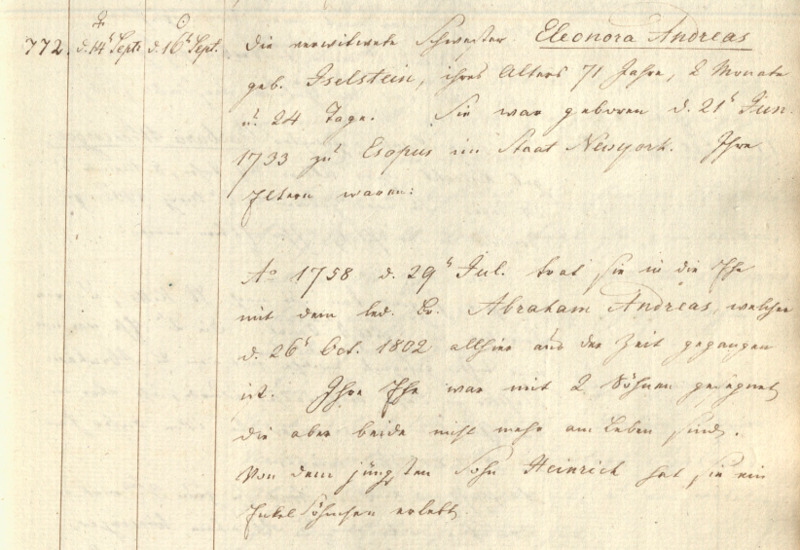
This brief Moravian memoir records the life of Eleonora Andreas, born Iselstein, who was born in 1733 in Esopus, New York. In 1758 she married Abraham Andreas within the Moravian community, and together they had two sons, though both died before her. Widowed in 1802, she lived to the age of 71 and was survived by a young grandson through her son Heinrich.