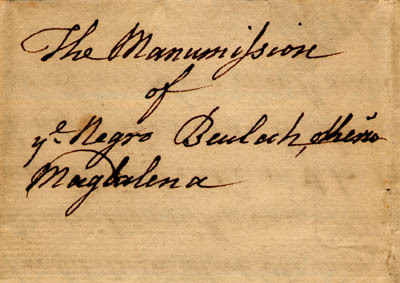
Letter of manumission for Magdalena (formerly Beulah) by Charles Brockden in Philadelphia, March 3, 1752. Part of a folder of various papers regarding enslaved people owned by the Moravian congregation in Bethlehem, Pennsylvania.
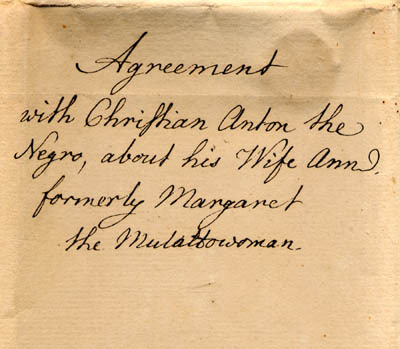
Agreement between the freed slave Christian Anton in Emmaus and August Spangenberg and Peter Böhler to pay off the purchase price for his future wife, the slave Ann Cherry (formerly Margaret), June 8, 1762. Part of a folder of various papers regarding enslaved people owned by the Moravian congregation in Bethlehem, Pennsylvania.
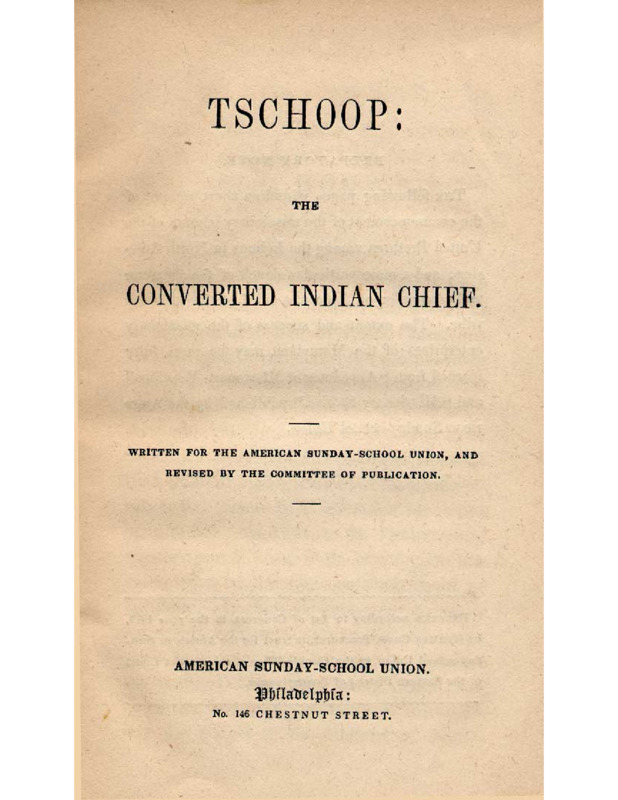
Tschoop: The Converted Indian Chief is a book written in 1842 by the American Sunday School Union. The book tells the story of Tschoop, a Native American chief who converted to Christianity in the mid-18th century. The book follows Tschoop's life, from his early days as a hunter and warrior to his conversion to Christianity and his eventual role as a missionary to his own people. The book also explores the challenges and struggles that Tschoop faced as a Christian Native American, including discrimination and mistrust from both his own people and the white settlers who were colonizing their land.
Digitized from text held by the Reeves Library, Moravian University & Theological Seminary, 2000.
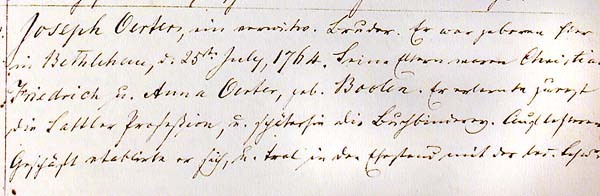
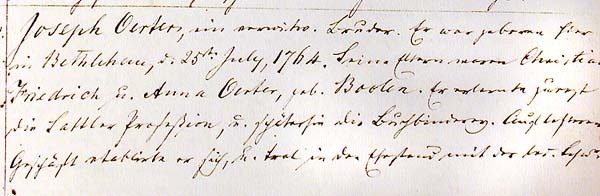
This church register entry records the 1841 death of Joseph Oerter of Bethlehem, Pennsylvania, and includes a brief biography of his life. Born in 1764 to Christian Friedrich and Anna Oerter, he trained first as a saddler and later became a bookbinder. In 1793 he married Maria Justine Hasse, and together they had four children, three of whom survived him, including a son who was a missionary in the West Indies. Widowed in 1818, Oerter suffered from painful rheumatic illness for many years but was remembered for his patience and faith. After developing a fever in his final days, he died peacefully at age 76, surrounded by the blessings of the Moravian congregation.
This memorial biography recounts the life of Eleonora Elisabeth von Seidliz, a Moravian unmarried sister and longtime leader of the Single Sisters’ Choir. Born in Silesia in 1724, she experienced hardship after her father’s death and later joined the Moravian congregation at Gnadenfrey with her sister in 1743. After embracing the Moravian faith, she served in numerous leadership roles in Europe and England before traveling to Pennsylvania in 1763 to become warden of the Single Sisters’ Choir in Bethlehem. She faithfully carried out her duties for nearly two decades despite declining health, suffering from severe chest illness and coughing of blood. She died peacefully at age 65 after a lifetime devoted to religious service and leadership within the Moravian community.
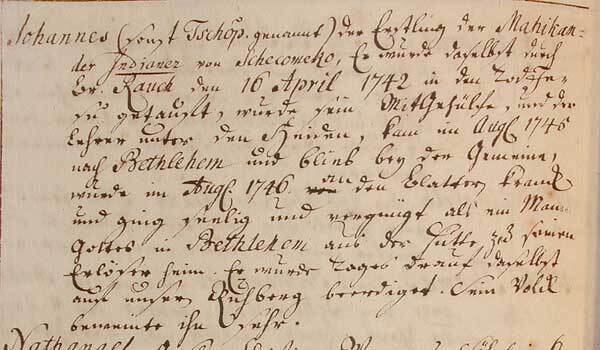
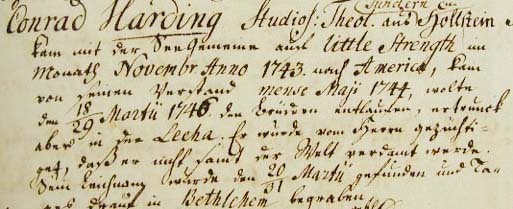
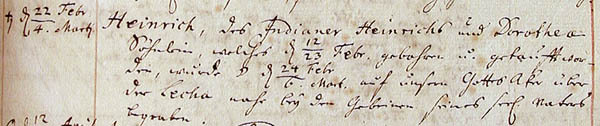
This is the death notification in the church register for Tschoop, aka Johannes, which occurred in Bethlehem, Pennsylvania, in 1746. The entry contains a short biography.
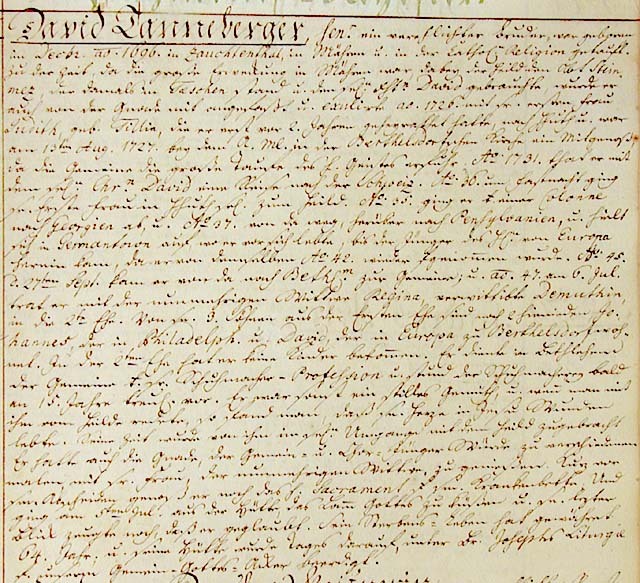
This is the death notification in the church register for David Tanneberger Sr., which occurred in Bethlehem, Pennsylvania, in 1760. The entry contains a biography.
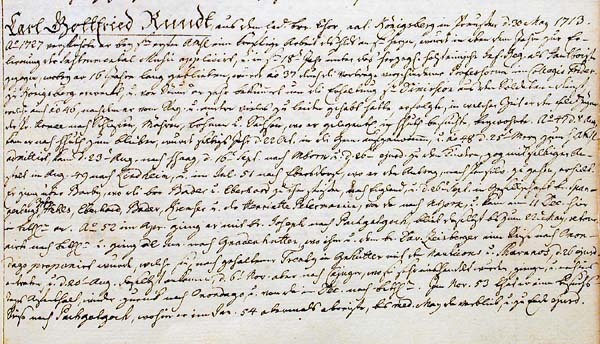
This the death notification in the church register for Carl Gottfried Rundt, which occurred in Bethlehem, Pennsylvania, in 1764. The entry in the register includes a biography.
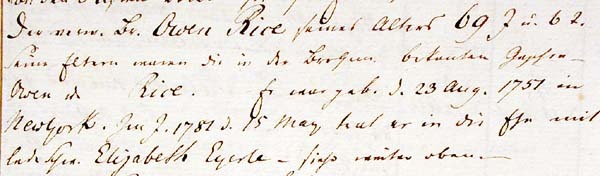
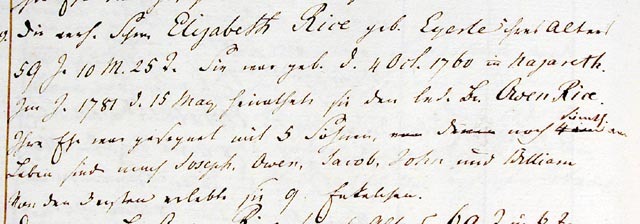
This is the death notification in the church register for Elizabeth Rice, which occurred in Bethlehem, Pennsylvania, in 1820. The entry includes details about her genealogy.
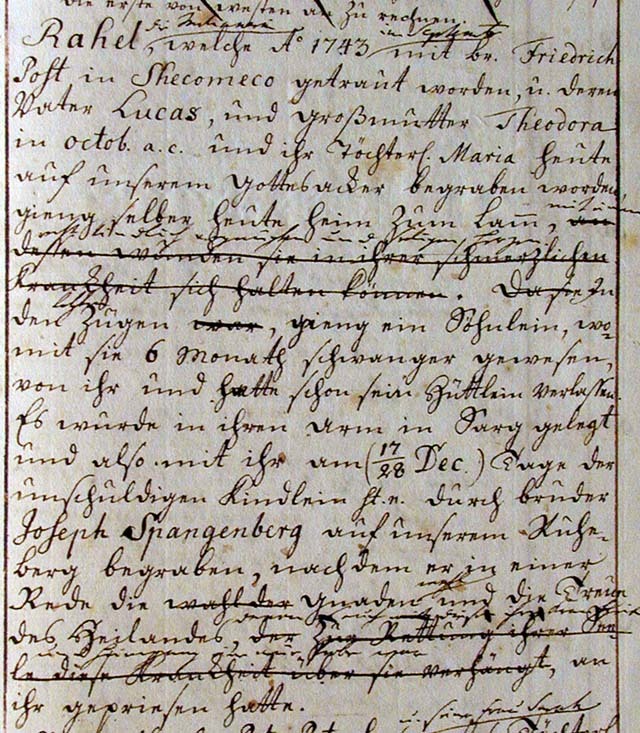
This is the death notification in the church register for Rachel Post, which occurred in Bethlehem, Pennsylvania, in 1747. The entry contains a biography.
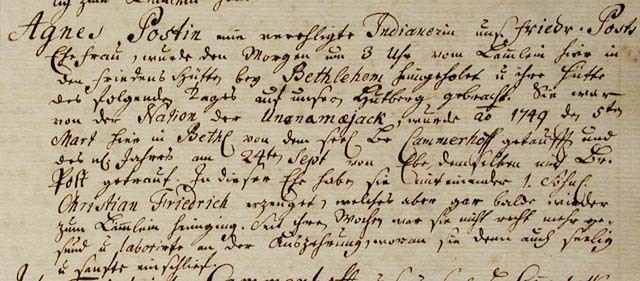
This is the death notification in the church register of Agnes Post (Postin), which occurred in Bethlehem, Pennsylvania, in 1751. The entry includes a very short biography.
This is the death notification in the church register for John (Johann) Matthew (Matthacus) Otto, which occurred in Bethlehem, Pennsylvania, in 1786. The entry contains a biography.
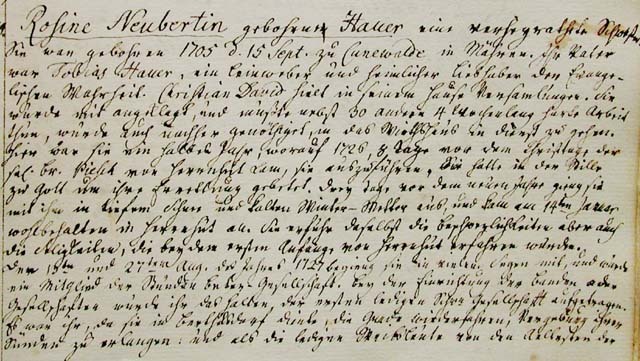
This is the death notification in the church register for Rosina Neubert (Neubertin), which occurred in Bethlehem, Pennsylvania, in 1785. The entry also contains a biography.
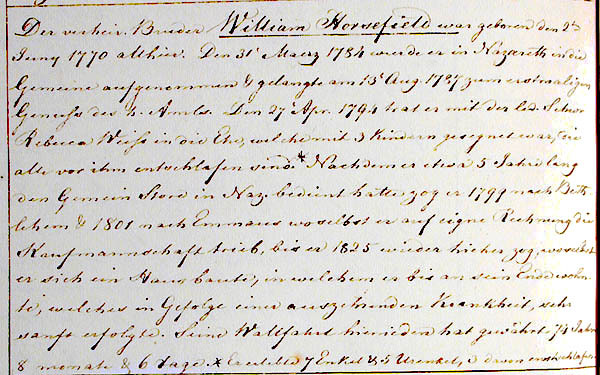
This is the death notification in the church register for William Horsfield, which occurred in Bethlehem, Pennsylvania, in 1845. The entry also includes a short biography.
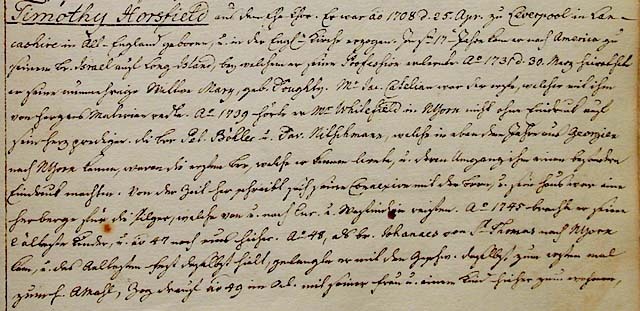
This is the death notification in the church register for Timothy Horsfield, which occurred in Bethlehem, Pennsylvania, in 1773. The entry also contains a biography.
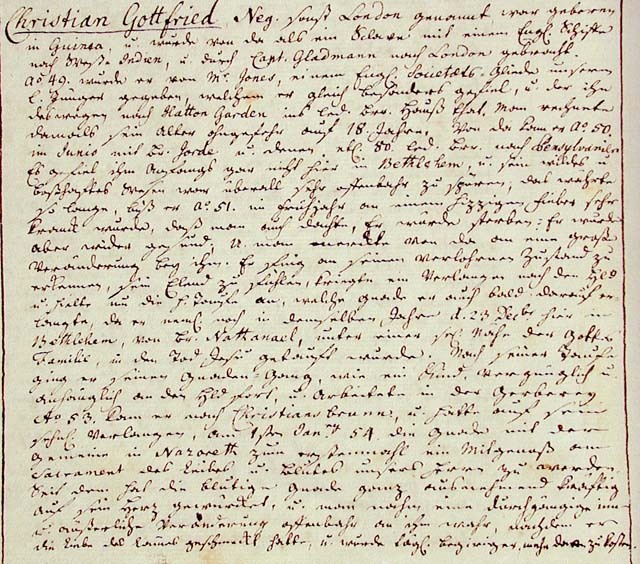
This is the death notification in the church register for Christian Gottfried, which occurred in Bethlehem, Pennsylvania, n 1756. It also contains a biography.
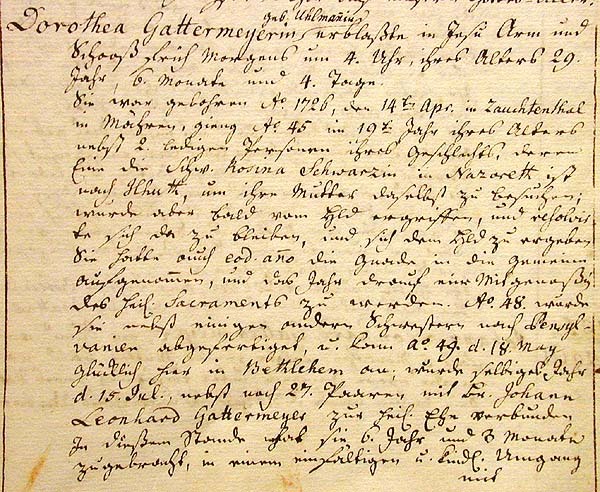
This is the notification in the church register of the death of Dorothy Gattermeyer, which occurred in Bethlehem, Pennsylvania, in 1755. It includes a biography. This text is a classic Moravian memoir or death narrative (“Lebenslauf”), written to commemorate her faith, service, suffering, and spiritually joyful death. It portrays her as devoted, humble, industrious, and deeply centered on Moravian devotional life until her death at age 29 in 1755.
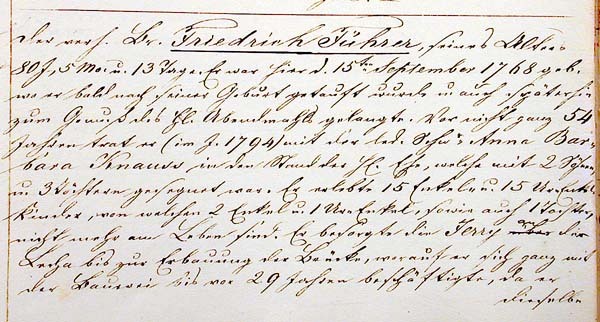
This church memoir records the life and death of Friedrich Führer, a longtime Moravian resident of Bethlehem, Pennsylvania, who was born in 1768 and died at age 80. A farmer and former ferry operator on the Lehigh River, he married Anna Barbara Knauss in 1794 and together they raised five children and a large extended family. Despite suffering a serious leg injury later in life and declining health after a severe illness, he remained active and faithful. The account emphasizes his peaceful readiness for death and his passing under the blessing of the Moravian congregation.
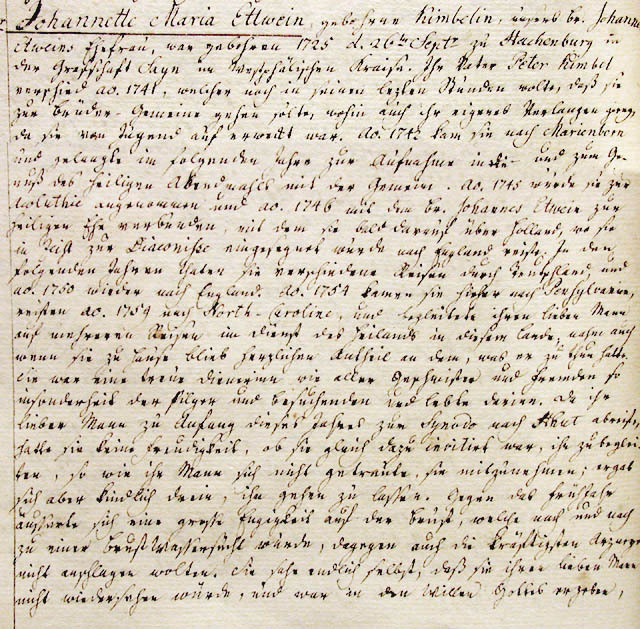
This Moravian memoir commemorates Johanetta Maria Ettwein, born Kimbel, who was born in 1725 in Westphalia and became a devoted member and leader within the Moravian Church. After joining the congregation in the 1740s, she married Johannes Ettwein and accompanied him on missionary and church work throughout Europe and colonial America, including Pennsylvania and North Carolina. Remembered for her faithful service, hospitality, and quiet devotion to the Savior, she faced her final illness with peace and resignation to God’s will before dying in 1789 at the age of 63, leaving behind children and grandchildren.
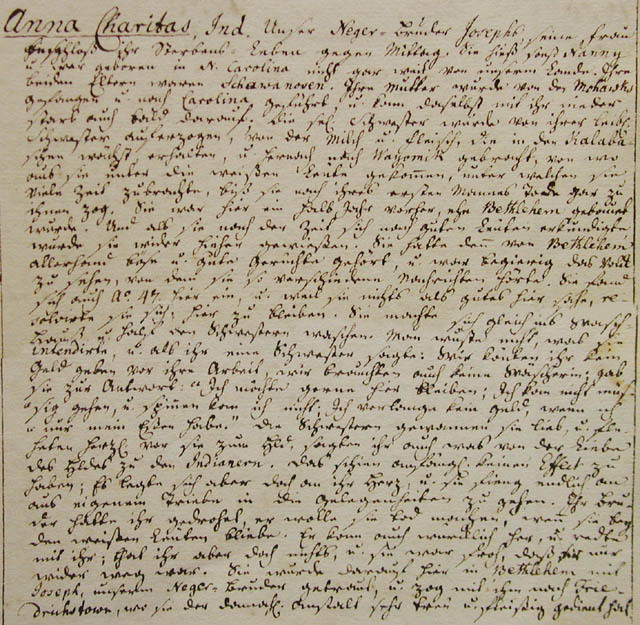
This Moravian memoir recounts the life of Anna Caritas, a Shawnee woman also called Nanny, who came to Bethlehem in the 1740s after hearing reports about the Moravians. Drawn by the kindness of the community and their teachings about the Savior, she chose to remain there, worked faithfully among the sisters, and was baptized in 1748. She later married Joseph, a Black Moravian brother, and served diligently in Moravian settlements while becoming known for her quiet, patient, and devoted spirit. During her final illness in 1755, she longed for Communion and expressed gratitude that the Savior had brought her to Bethlehem before peacefully dying in faith, becoming remembered as the first Shawnee believer in the Moravian community to “go to the Eternal Hills.”